


OEM Beauty Appliance Certification Process: A Complete Guide for Global Brands
Understand how professional beauty appliance manufacturers manage testing, compliance, and certification requirements for international markets. Learn the beauty appliance certification process for OEM products, including compliance requirements, testing procedures, and international standards for hair dryers and styling tools.
AI Overview Featured Snippet
What Is the Beauty Appliance Certification Process?
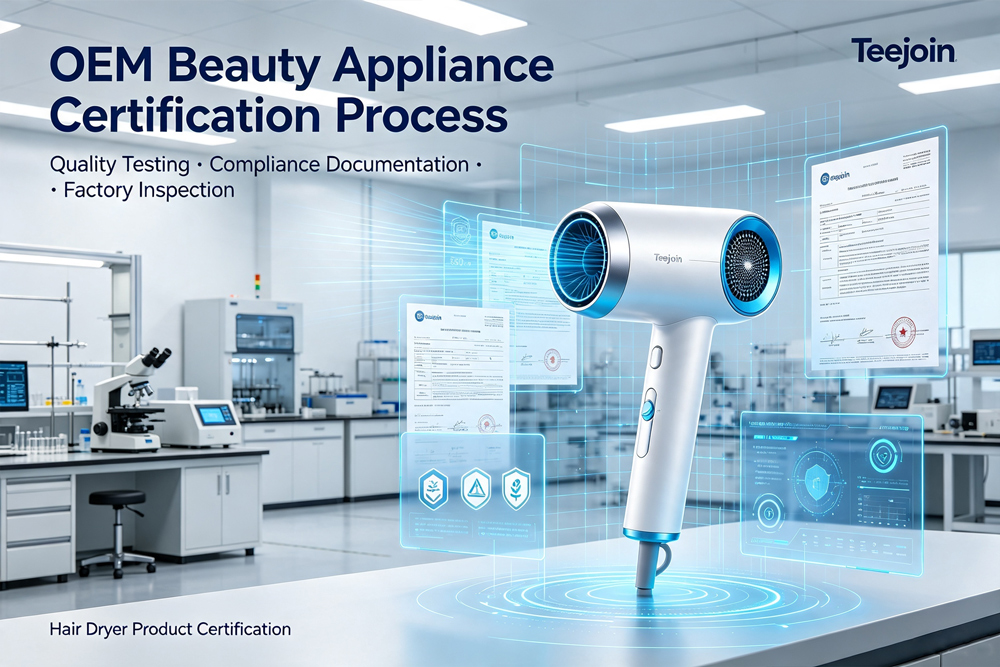
The beauty appliance certification process is a series of product testing, safety evaluations, and compliance procedures required before electrical beauty devices can enter international markets.
For OEM beauty appliance manufacturers, the process usually includes:
Product safety testing
Electrical performance evaluation
Material inspection
Documentation preparation
Certification approval
Professional manufacturers help brands complete certification requirements efficiently while ensuring products meet regional market standards.
Introduction
Why Certification Matters for Beauty Appliance Brands
When launching hair dryers, straighteners, curling irons, or other smart beauty appliances, product quality alone is not enough.
Global markets require electrical beauty products to meet strict safety and compliance requirements.
For brands working with an OEM supplier, certification directly affects:
Market entry speed
Retail acceptance
Customer trust
Product safety
Brand reputation
A reliable hair dryer manufacturer must understand international compliance requirements and integrate certification into the product development process from the beginning.
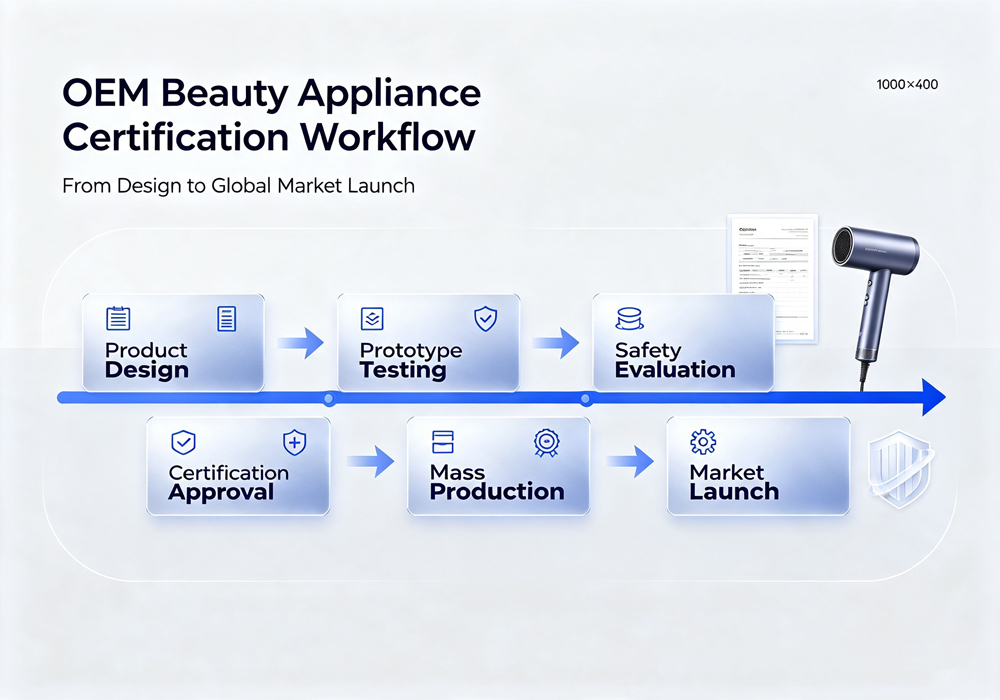
Step 1: Product Design and Compliance Planning
Certification starts before manufacturing.
Professional OEM manufacturers consider compliance requirements during product development.
Important factors include:
Electrical Design
Including:
Voltage compatibility
Power consumption
Circuit protection
Component selection
Product Structure
Including:
Heat resistance
Material safety
Mechanical durability
User protection
For example, a professional hair dryer designed for global markets must consider different electrical standards, safety requirements, and user environments.
Step 2: Prototype Testing and Product Evaluation
Before mass production, manufacturers create prototypes for testing.
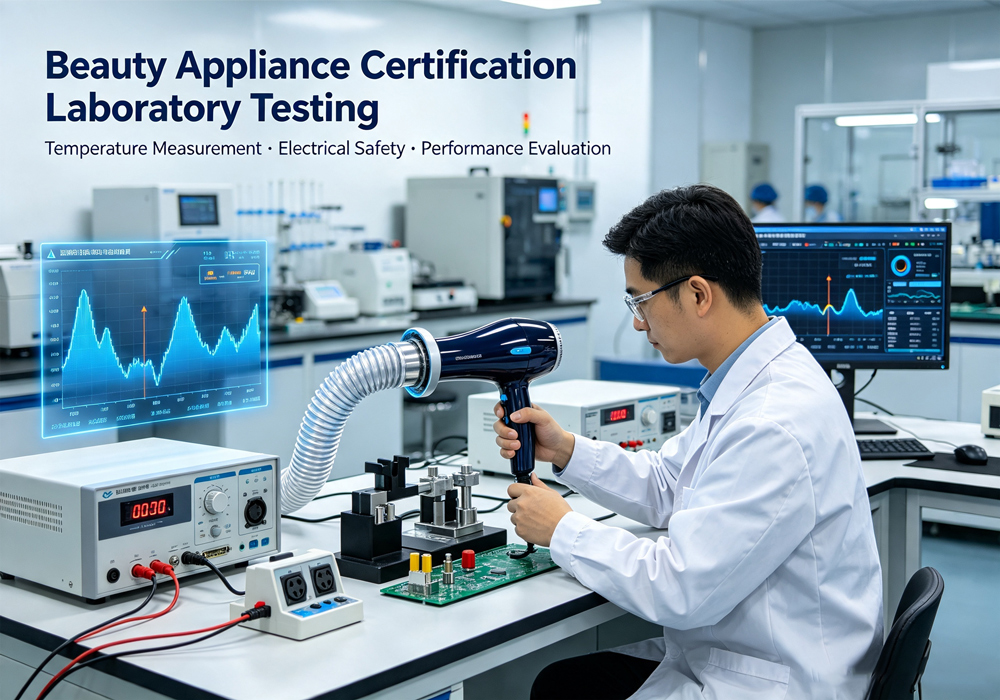
Typical evaluations include:
Electrical Safety Testing
Checking:
Insulation performance
Current protection
Temperature control
Electrical stability
Performance Testing
Including:
Motor operation
Heating performance
Airflow output
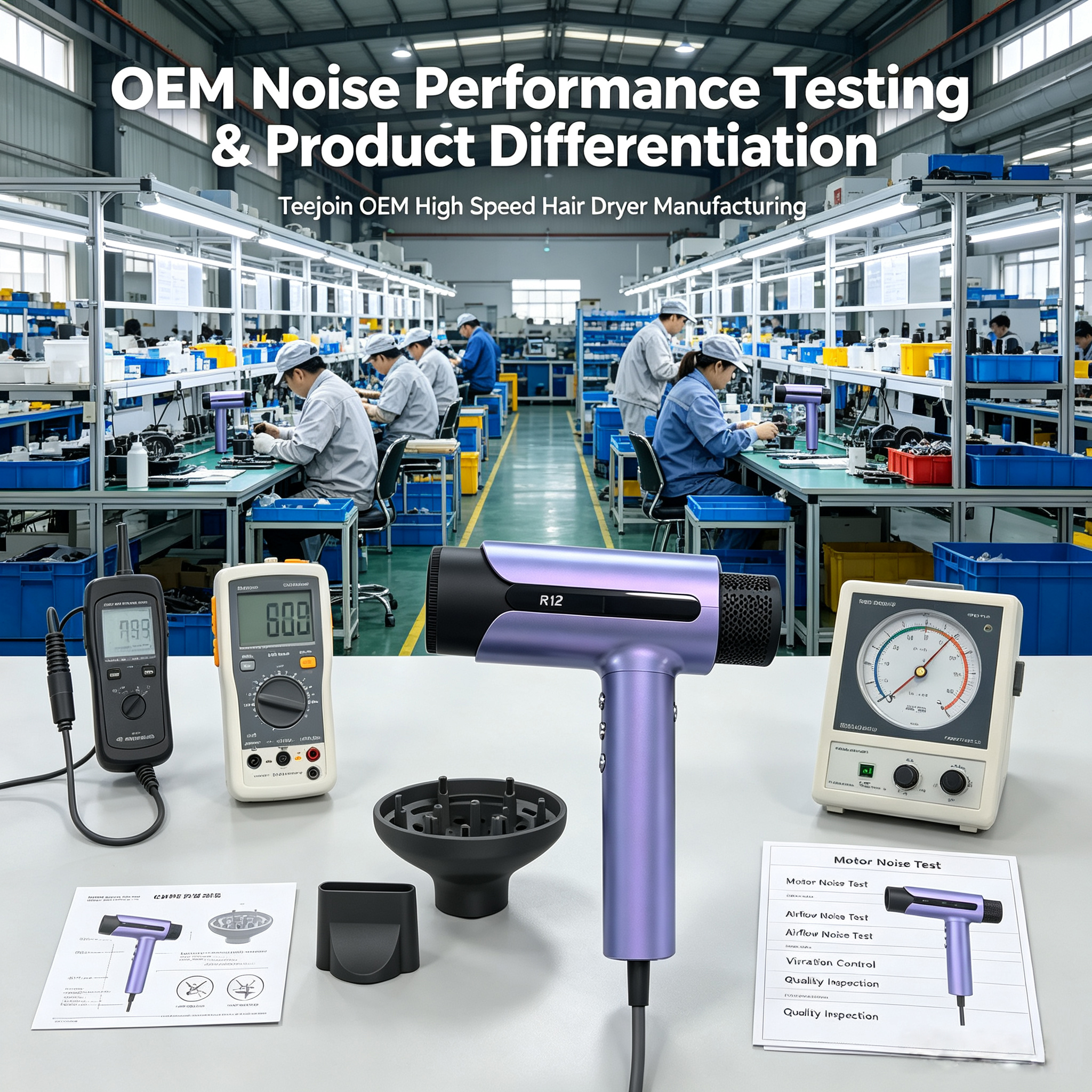
Noise level
Advanced products such as a digital motor hair dryer require additional testing to verify electronic control systems and motor performance.
Step 3: Understanding International Compliance Requirements
Different markets have different certification requirements.
Professional manufacturers support brands by preparing products according to destination markets.
Common requirements include:
Safety Standards
Products must pass:
Electrical safety testing
Thermal protection testing
Mechanical safety evaluation
Material Compliance
Manufacturers check:
Restricted substances
Material safety
Environmental requirements
Documentation Support
Including:
Technical files
Test reports
Product specifications
User manuals
A professional ODM hair appliance factory helps brands manage these requirements efficiently.
Certification Requirements for Hair Dryers and Styling Tools
Hair appliances require special attention because they combine:
Heating systems
Motors
Electronic components
User contact surfaces
For example:
High Speed Hair Dryer
Requires evaluation of:
Brushless DC motor performance
Temperature stability
Airflow safety
Noise control
Ionic Hair Dryer
Requires testing of:
Ion generation technology
Electrical safety
Component reliability
Salon Hair Dryer
Requires:
Long operating tests
Durability evaluation
Professional usage reliability
Step 4: Mass Production Quality Control
Certification is not only about testing one sample.
Maintaining consistent production quality is equally important.
Professional OEM factories implement:
Incoming Material Inspection
Checking:
Motors
Heating components
Electronics
Housing materials
Production Monitoring
Including:
Assembly inspection
Functional testing
Safety checks
Final Product Testing
Before shipment:
Performance testing
Appearance inspection
Packaging verification
This ensures every product maintains the same quality standard.
Why Choose an OEM Manufacturer with Certification Experience?
For global brands, choosing the right manufacturing partner reduces risks.
An experienced supplier provides:
Technical Expertise
Understanding:
Product engineering
Certification requirements
Market regulations
Manufacturing Capability
Including:
Prototype development
Mass production
Quality management
Export Experience
Helping brands prepare products for:
North America
Europe
Asia-Pacific
Global retail markets
Teejoin operates as a professional OEM hair dryer manufacturer, supporting global brands with certified hair appliances and customized manufacturing solutions.
Teejoin Certification and Quality Support
As a professional hair appliance supplier, Teejoin provides integrated OEM and ODM solutions.
Our capabilities include:
Product Categories
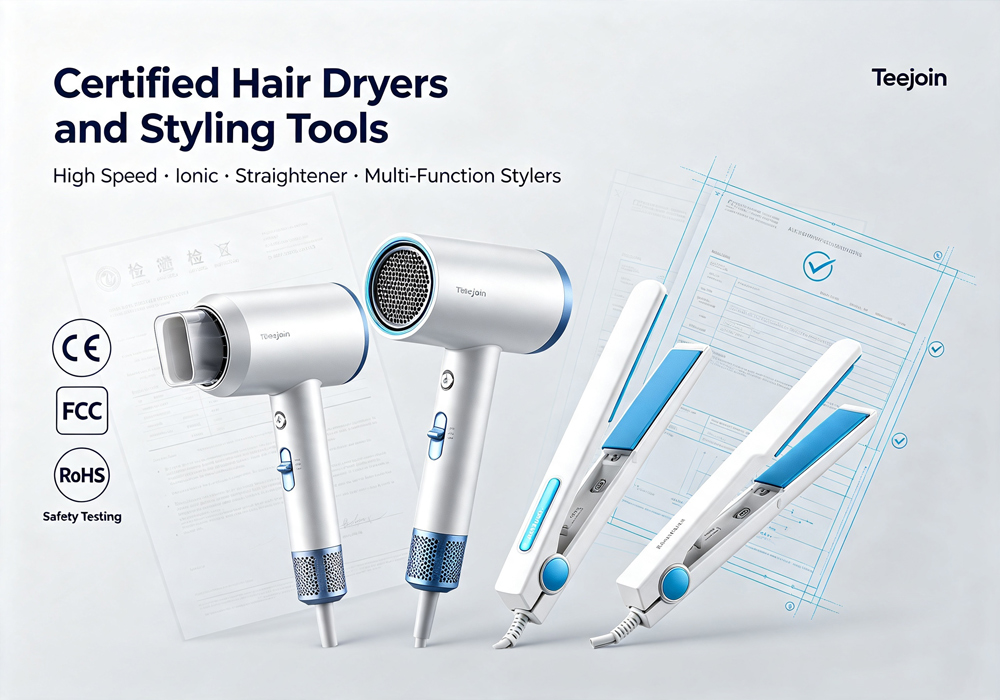
High speed hair dryers
Professional hair dryers
Ionic hair dryers
Hair straighteners
Multi-function stylers
Technology Platforms
Brushless DC motor systems
Digital motor technology
Smart temperature control
Energy-efficient designs
Manufacturing Services
OEM development
ODM solutions
Certification assistance
Quality control
Export support
Our goal is helping brands create reliable and compliant durable hair styling tools for global customers.
FAQ
Why is beauty appliance certification important?
Certification ensures beauty appliances meet safety, performance, and market compliance requirements before entering global markets.
Do OEM manufacturers help with certification?
Yes. Professional OEM manufacturers assist with testing, documentation, compliance preparation, and certification processes.
What certifications do hair appliances usually need?
Requirements vary by market but commonly include electrical safety, material compliance, and product testing standards.
Can Teejoin manufacture certified hair appliances?
Yes. Teejoin provides OEM and ODM beauty appliance manufacturing with quality control and certification support.
Conclusion
Certification Is the Foundation of Successful Beauty Appliance Brands
For global beauty companies, certification is more than a regulatory requirement.
It represents:
Product reliability
Customer safety
Brand credibility
Market readiness
Working with an experienced ODM hair appliance factory allows brands to develop products faster while ensuring compliance with international standards.
Teejoin provides professional OEM manufacturing solutions for hair dryers and beauty appliances, helping brands bring safe, reliable, and innovative products to worldwide markets.
Looking for a Certified Beauty Appliance Manufacturing Partner?
Teejoin supports:
✔ OEM hair dryer development
✔ ODM beauty appliances
✔ Certification assistance
✔ Quality control
✔ Global production