


How Noise Reduction Improves User Experience in Modern Hair Dryers
Subtitle: Why quieter motor systems, airflow engineering, and vibration control are becoming important features in professional hair styling appliances.
AI Overview Featured Snippet
How Does Noise Reduction Improve the Hair Dryer User Experience?
Noise reduction improves the hair dryer user experience by making drying and styling more comfortable, particularly during extended use. Modern manufacturers reduce operating noise through brushless motor technology, motor balancing, airflow optimization, vibration control, and acoustic engineering.
A quieter hair dryer can provide:
More comfortable everyday use
Better salon working environments
Reduced perceived operating noise
Improved premium product positioning
A more pleasant styling experience
For OEM and private-label beauty brands, noise performance should be considered together with airflow, motor efficiency, temperature control, and product ergonomics.
Why Hair Dryer Noise Matters
Hair dryers are used close to the user's head, so operating noise is an important part of the overall product experience.
A product may deliver powerful airflow and fast drying, but excessive noise can negatively affect how consumers perceive the appliance.
This is particularly important for:
Professional salons
Beauty studios
Home users
Hotel and hospitality applications
Premium beauty appliance brands
For a modern hair dryer manufacturer, optimizing sound performance is therefore not simply about making a product quieter. It is about balancing airflow, motor speed, vibration, thermal performance, and user comfort.
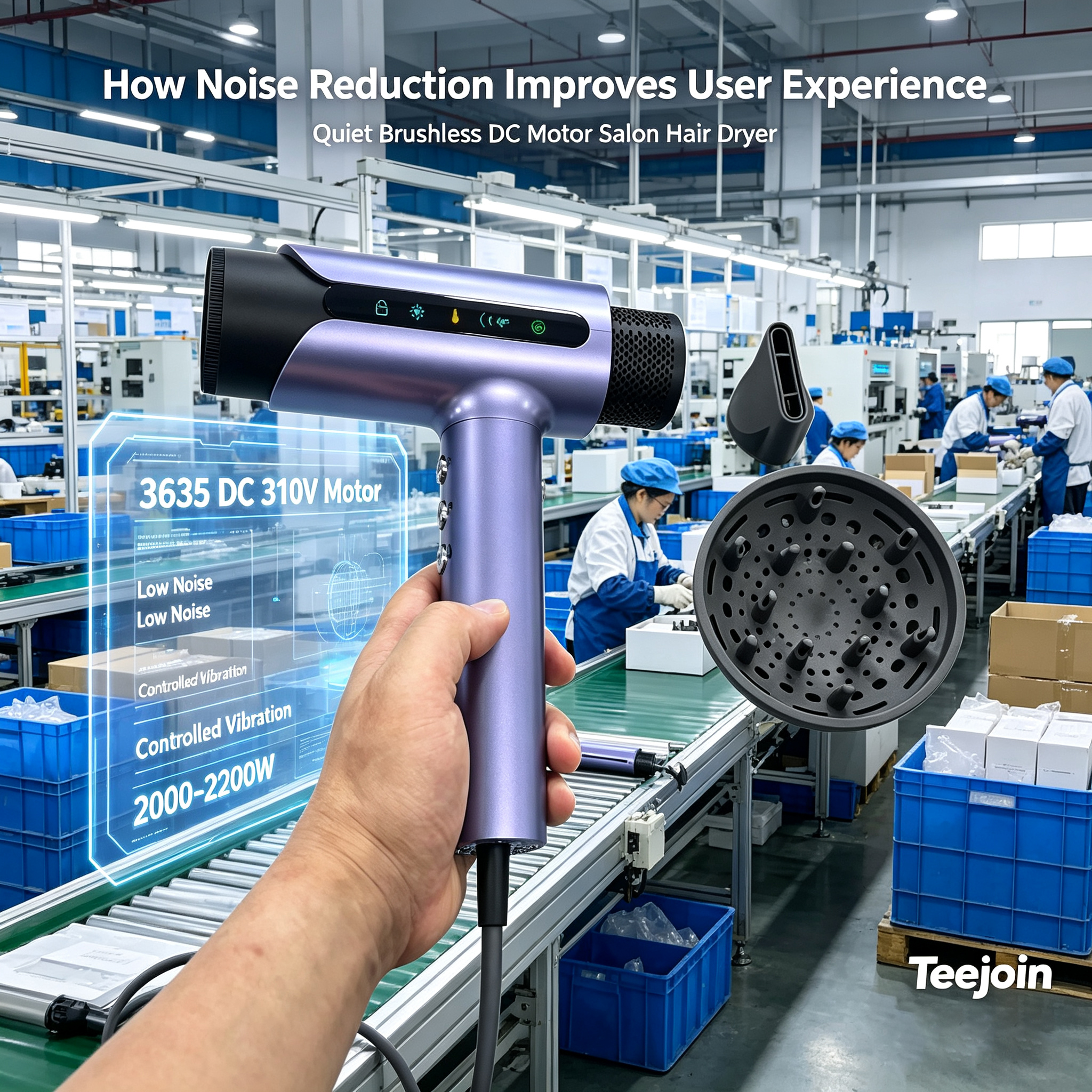
What Causes Hair Dryer Noise?
Hair dryer noise can come from several different sources.
The most important factors include:
1. Motor Operation
The motor is one of the primary sources of operating noise.
High-speed motors rotate at very high speeds, which means manufacturers need precise engineering to control mechanical and aerodynamic noise.
2. Airflow Turbulence
Air moving rapidly through a narrow airflow path can create turbulence.
Poorly designed airflow channels can produce:
Whistling sounds
Turbulence
Airflow fluctuations
Higher perceived noise
3. Mechanical Vibration
Motor imbalance or poorly controlled vibration can transfer mechanical energy to the product housing.
This can make a hair dryer feel and sound louder than the motor itself would suggest.
4. Product Housing
The housing structure also affects how sound travels.
Material selection, internal structure, and airflow channels can influence the final acoustic performance.
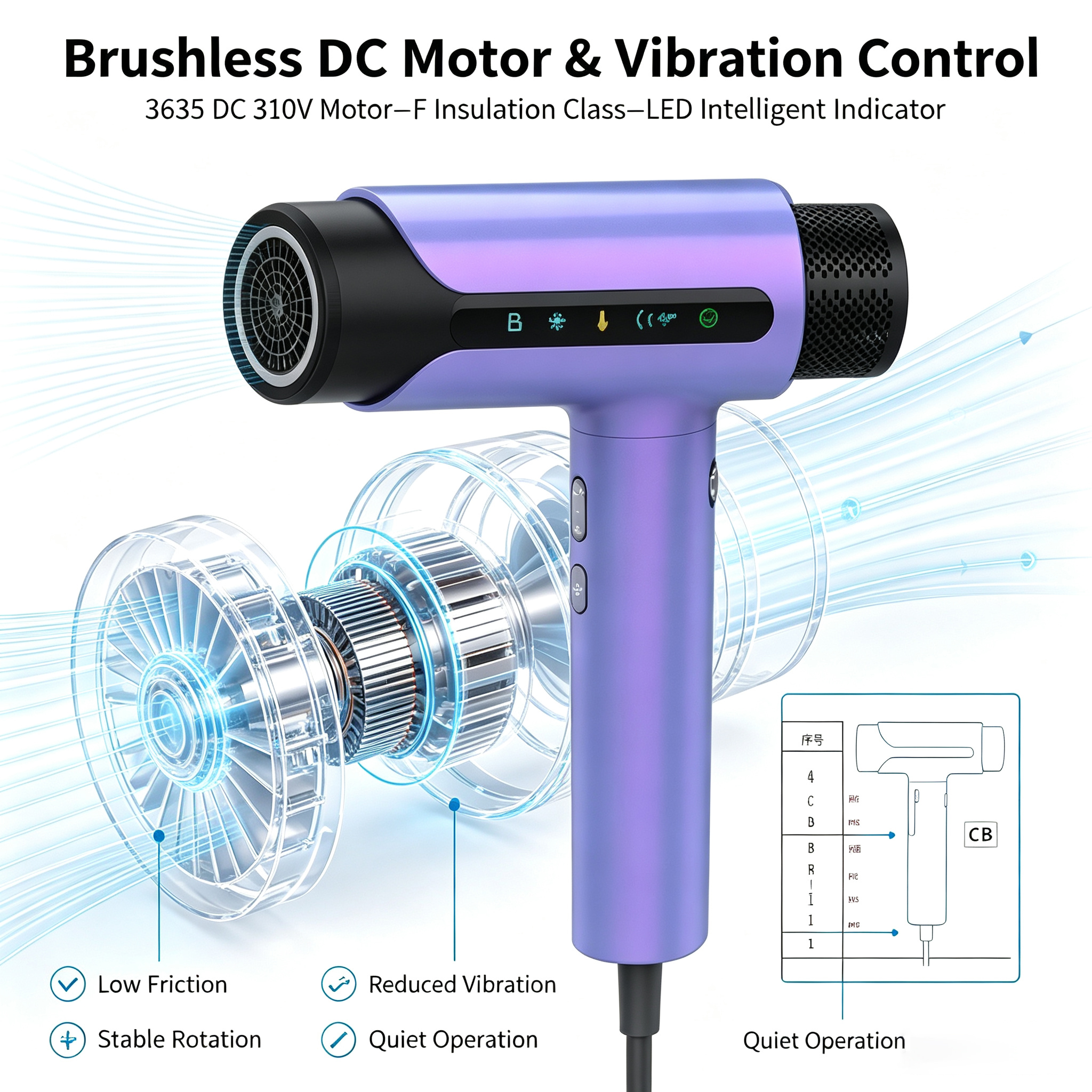
How Brushless Motors Help Reduce Noise
Modern brushless motor systems provide several advantages for premium hair appliances.
Unlike traditional brushed motors, brushless systems eliminate physical carbon brushes that contact the rotating component.
This can reduce certain sources of mechanical friction and wear.
More importantly, advanced brushless motor systems allow manufacturers to precisely engineer:
Motor speed
Rotor balance
Airflow performance
Vibration characteristics
Electronic control
When combined with appropriate mechanical and acoustic engineering, brushless technology can contribute to a smoother operating experience.
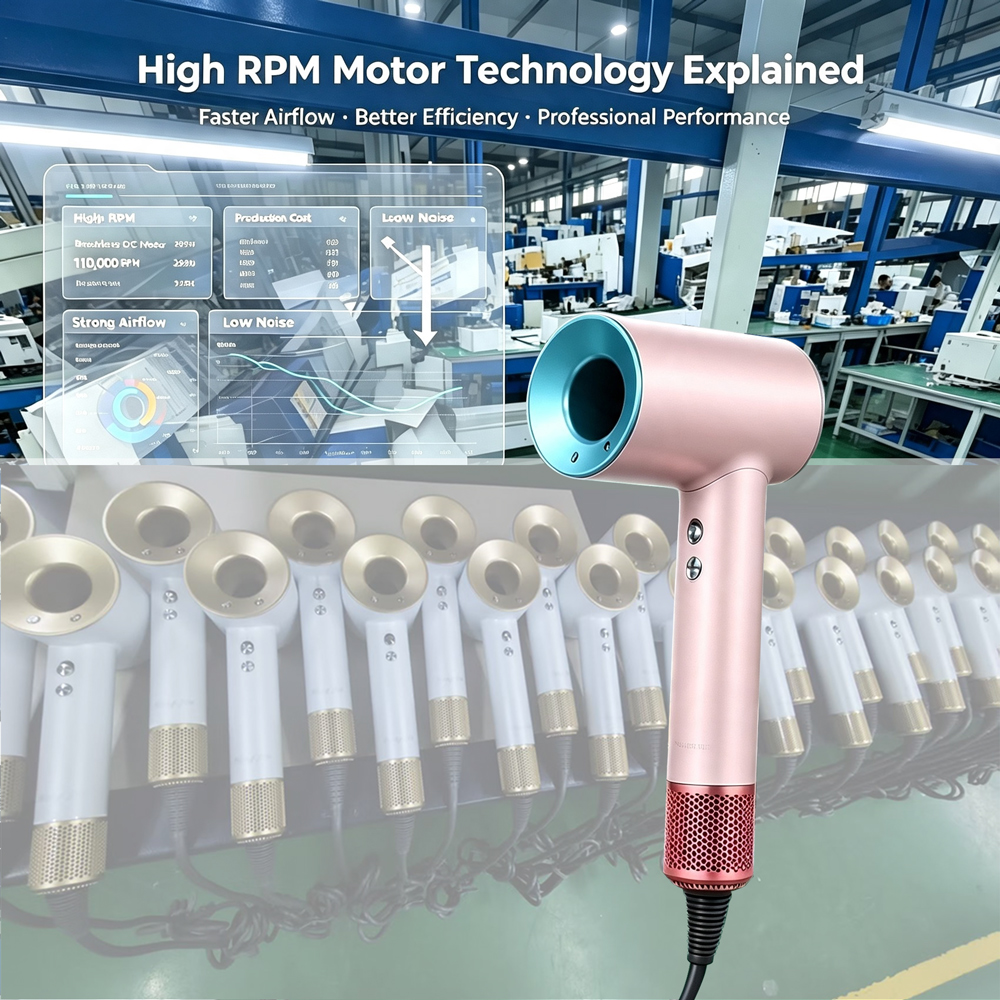
The Relationship Between Motor Speed and Noise
A common misconception is that a high-speed hair dryer must automatically be loud.
In reality, motor speed is only one factor affecting perceived noise.
A high-speed system can be engineered around:
Motor balance
Airflow path design
Fan geometry
Housing structure
Vibration isolation
Electronic speed control
This is why experienced manufacturers need to evaluate the complete system rather than focusing on motor RPM alone.
For example, a high speed hair dryer factory developing premium products may evaluate airflow and acoustic performance simultaneously during prototype testing.
The objective is not simply:
Higher speed = louder operation.
Instead, the engineering goal is:
Higher performance with controlled noise and vibration.
How Airflow Design Influences Noise
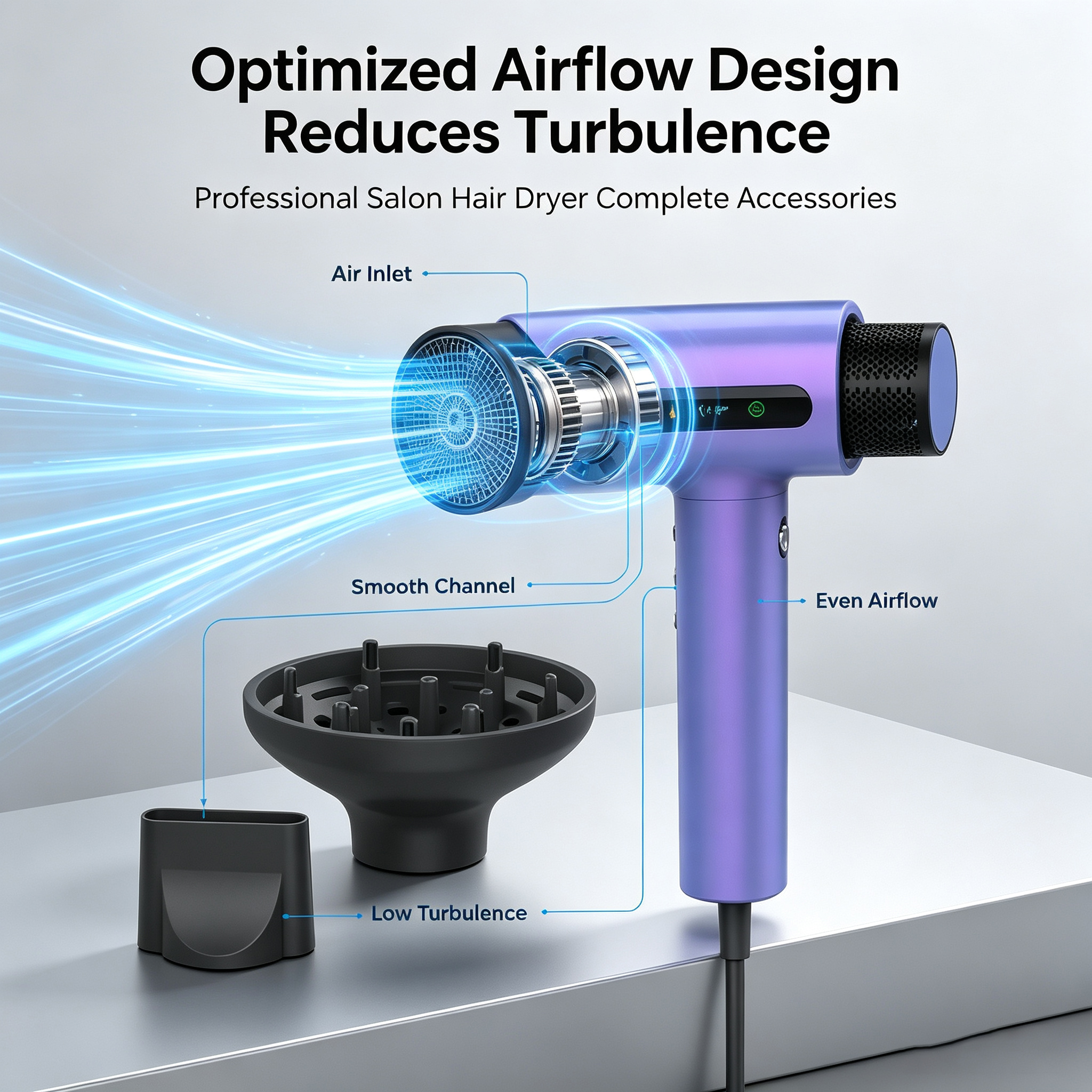
Airflow engineering plays an important role in the final acoustic performance of a hair dryer.
A well-designed airflow system can help reduce unnecessary turbulence while maintaining strong air output.
Engineers may evaluate:
Air inlet design
Fan geometry
Air channel dimensions
Air outlet structure
Internal airflow direction
Pressure distribution
This becomes particularly important for compact high-speed appliances.
A small motor combined with a highly optimized airflow system can deliver strong drying performance without relying solely on higher electrical power.
Why Lower Noise Improves User Experience
1. More Comfortable Daily Use
Consumers often use hair dryers several times per week.
A quieter appliance can make routine styling more comfortable.
This is especially relevant for people who:
Dry their hair for extended periods
Style their hair every morning
Share living spaces
Prefer a calmer bathroom environment
2. Better Salon Working Conditions
Salon professionals may operate hair dryers repeatedly throughout the day.
A lower-noise professional hair dryer can contribute to a more comfortable working environment.
This matters because stylists may spend several hours around:
Hair dryers
Hair straighteners
Clippers
Other electrical beauty equipment
Noise performance can therefore become part of the overall salon product experience.
3. Stronger Premium Product Positioning
Consumers often associate refined acoustic performance with premium engineering.
A product that feels:
Smooth
Balanced
Controlled
Comfortable
can create a stronger perception of quality.
For brands developing premium beauty products, noise optimization can therefore support product differentiation.
Noise Reduction Is More Than a Marketing Feature
Brands should avoid treating "quiet" as an isolated specification.
A better approach is to evaluate noise together with the entire product experience.
| Product Factor | Impact on User Experience |
|---|---|
| Motor speed | Drying performance |
| Airflow | Drying efficiency |
| Noise | Comfort |
| Vibration | Perceived quality |
| Temperature control | Hair and scalp comfort |
| Weight | Ergonomics |
| Handle design | Ease of use |
| Motor lifespan | Long-term reliability |
This is especially important when developing an OEM product.
A manufacturer should optimize the complete system rather than improving one specification at the expense of another.
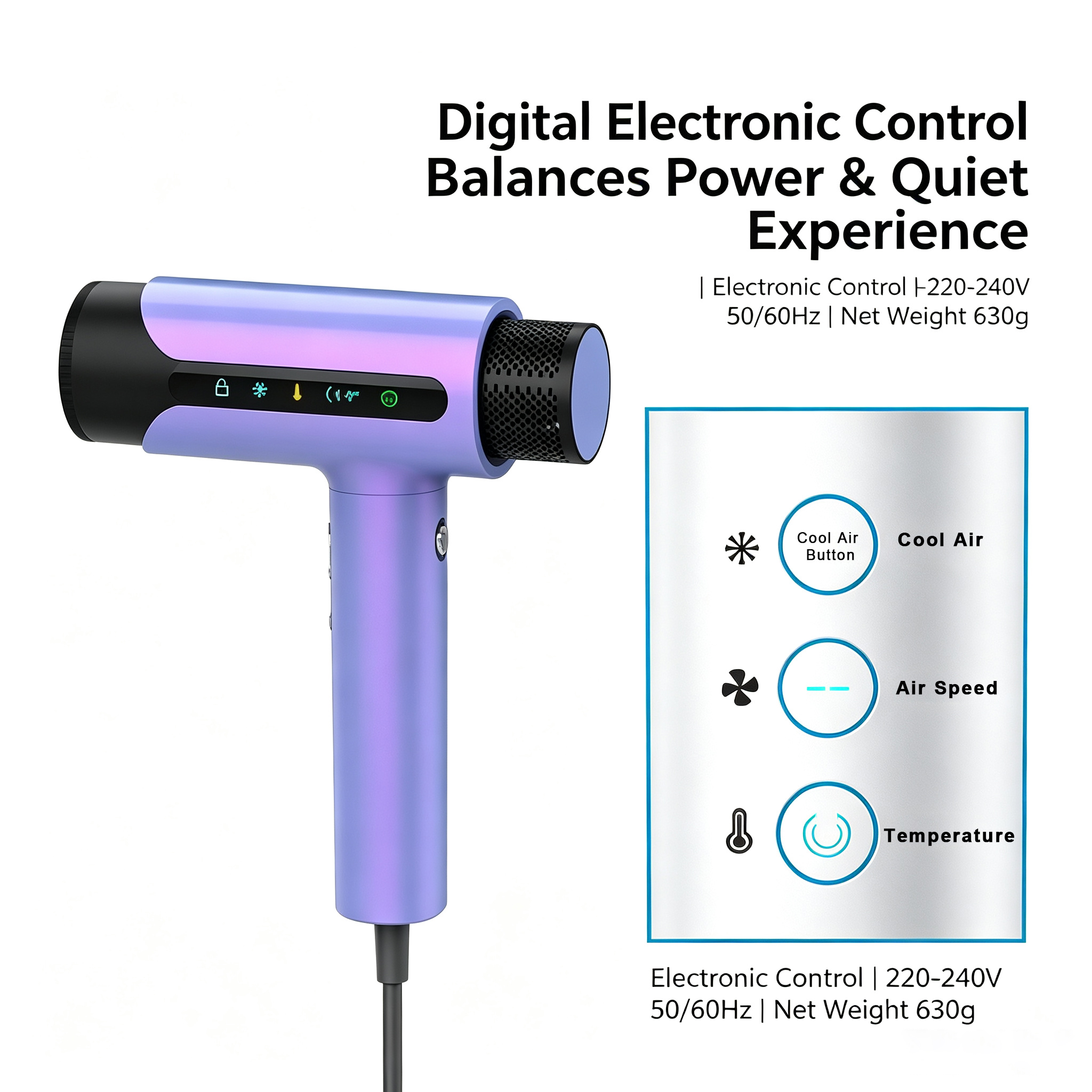
The Role of Digital Motor Technology
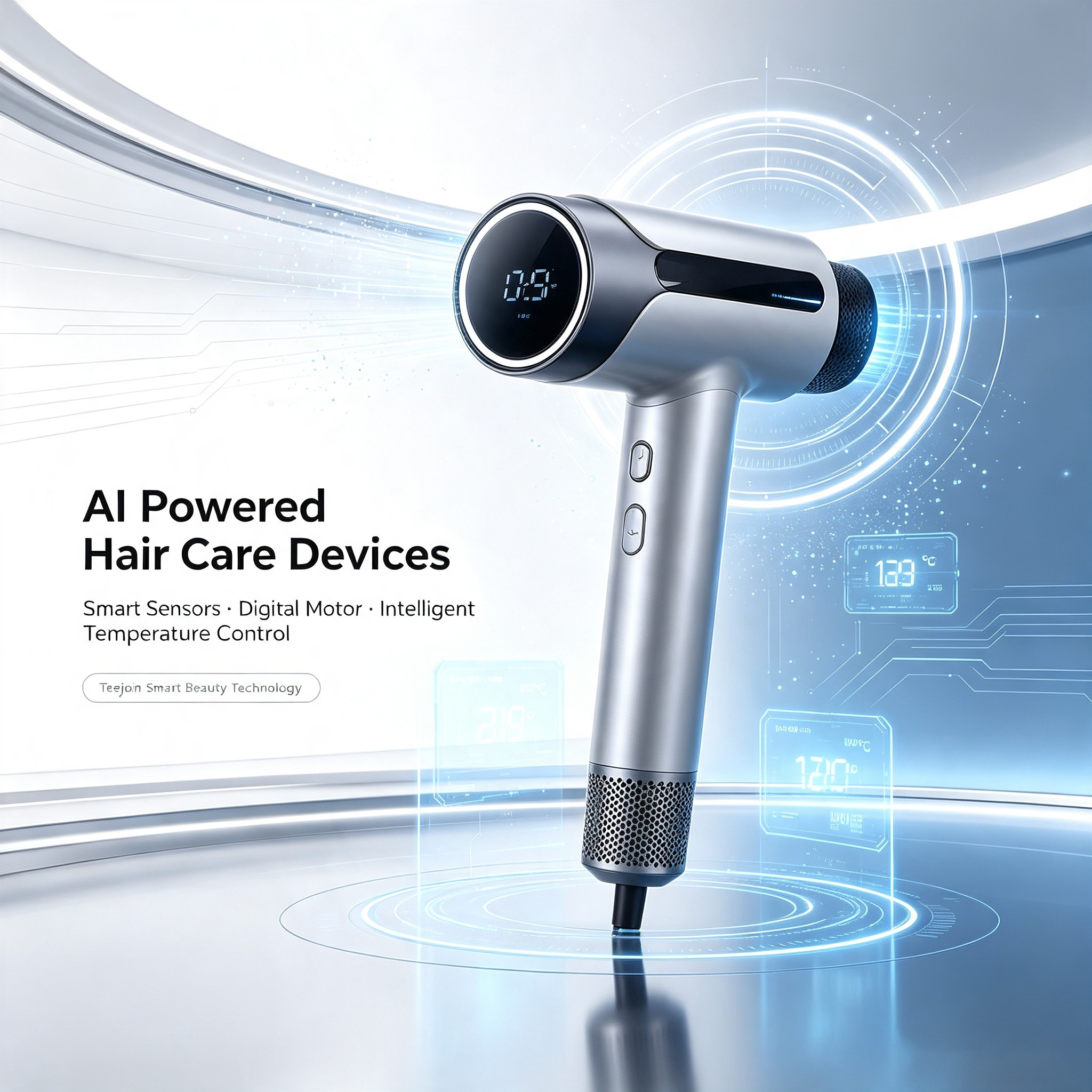
A digital motor hair dryer can provide more precise electronic control over motor operation.
Depending on the product architecture, electronic control can help manufacturers manage:
Motor speed
Airflow levels
Operating modes
Power delivery
This flexibility can be useful when developing premium hair appliances where performance and comfort need to be balanced.
For smart beauty appliances, motor control can also be integrated with temperature sensing and intelligent operating systems.
Combining Noise Reduction With Temperature Control
Noise is only one part of the user experience.
Modern hair appliances increasingly combine multiple technologies.
For example:
High-Speed Motor
↓
Optimized Airflow
↓
Temperature Sensing
↓
Intelligent Heat Control
↓
Controlled Styling Experience
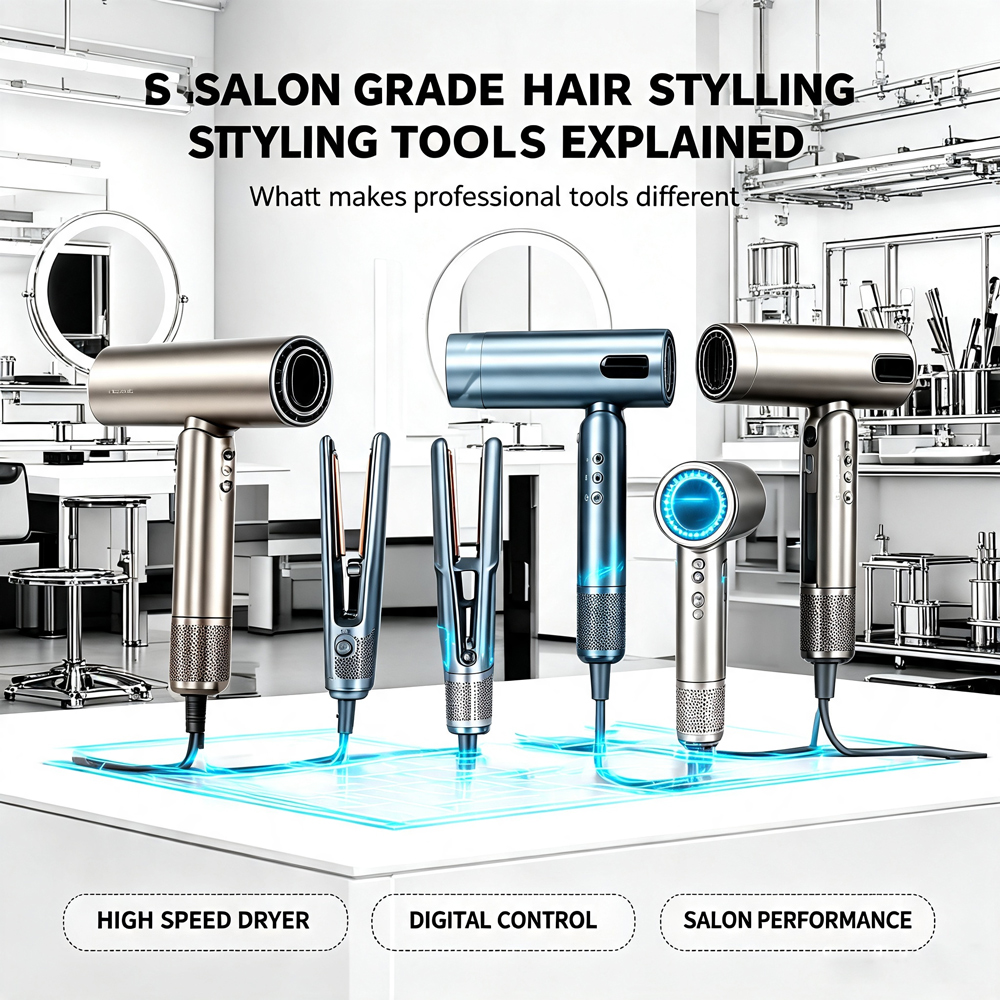
A professional salon hair dryer can therefore be designed around multiple performance objectives instead of simply maximizing power.
This approach is particularly valuable for premium brands looking to create differentiated products.
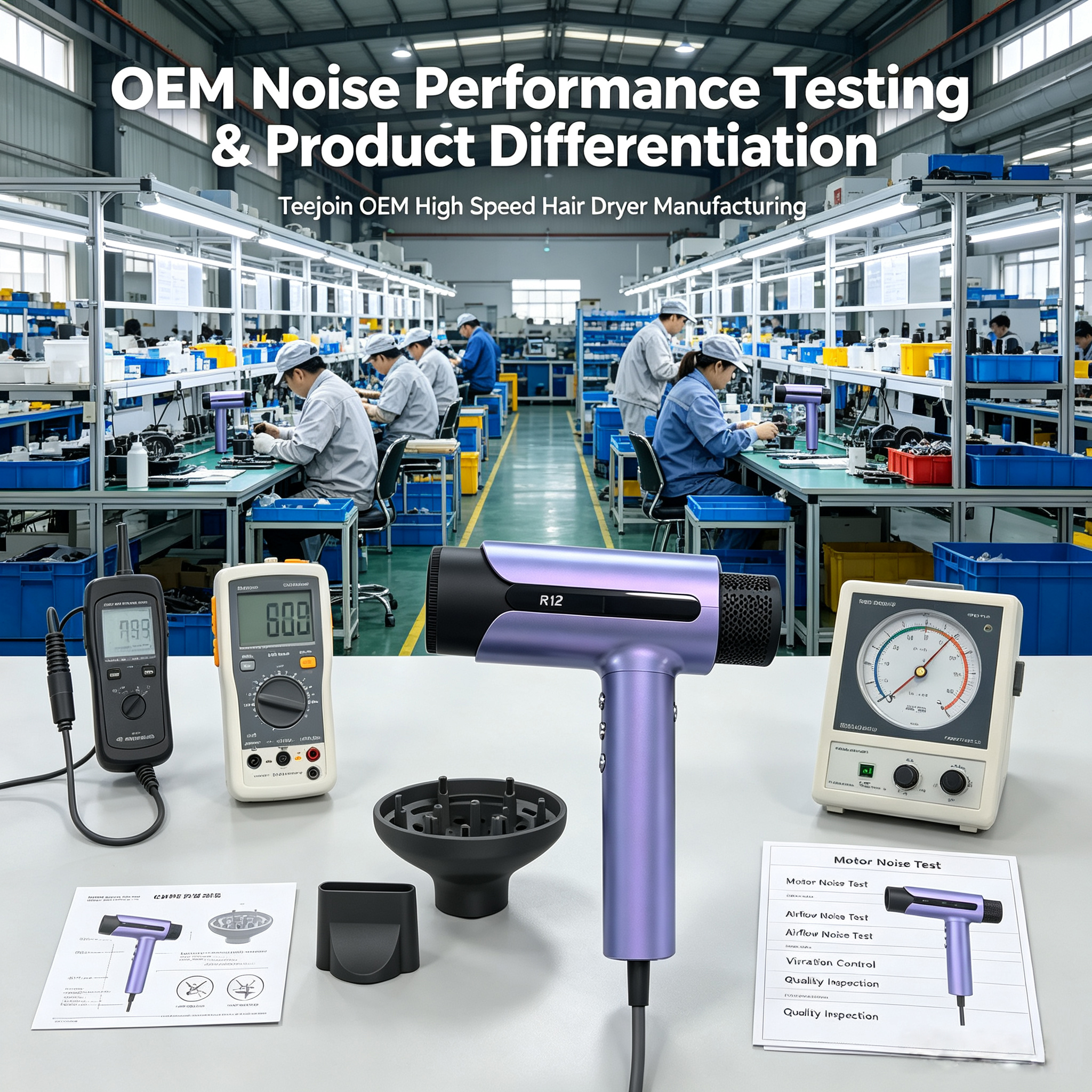
How OEM Manufacturers Test Noise Performance
For an OEM project, acoustic performance should ideally be considered during product development rather than after mass production begins.
A professional manufacturer can evaluate:
Motor Noise
Testing the motor under different operating speeds.
Airflow Noise
Evaluating sound generated by air movement.
Vibration
Checking whether motor vibration is transferred to the housing.
Product Structure
Testing whether the housing amplifies or reduces operating noise.
Complete Product
Evaluating the assembled appliance under realistic operating conditions.
This type of engineering process helps manufacturers identify potential issues before mass production.
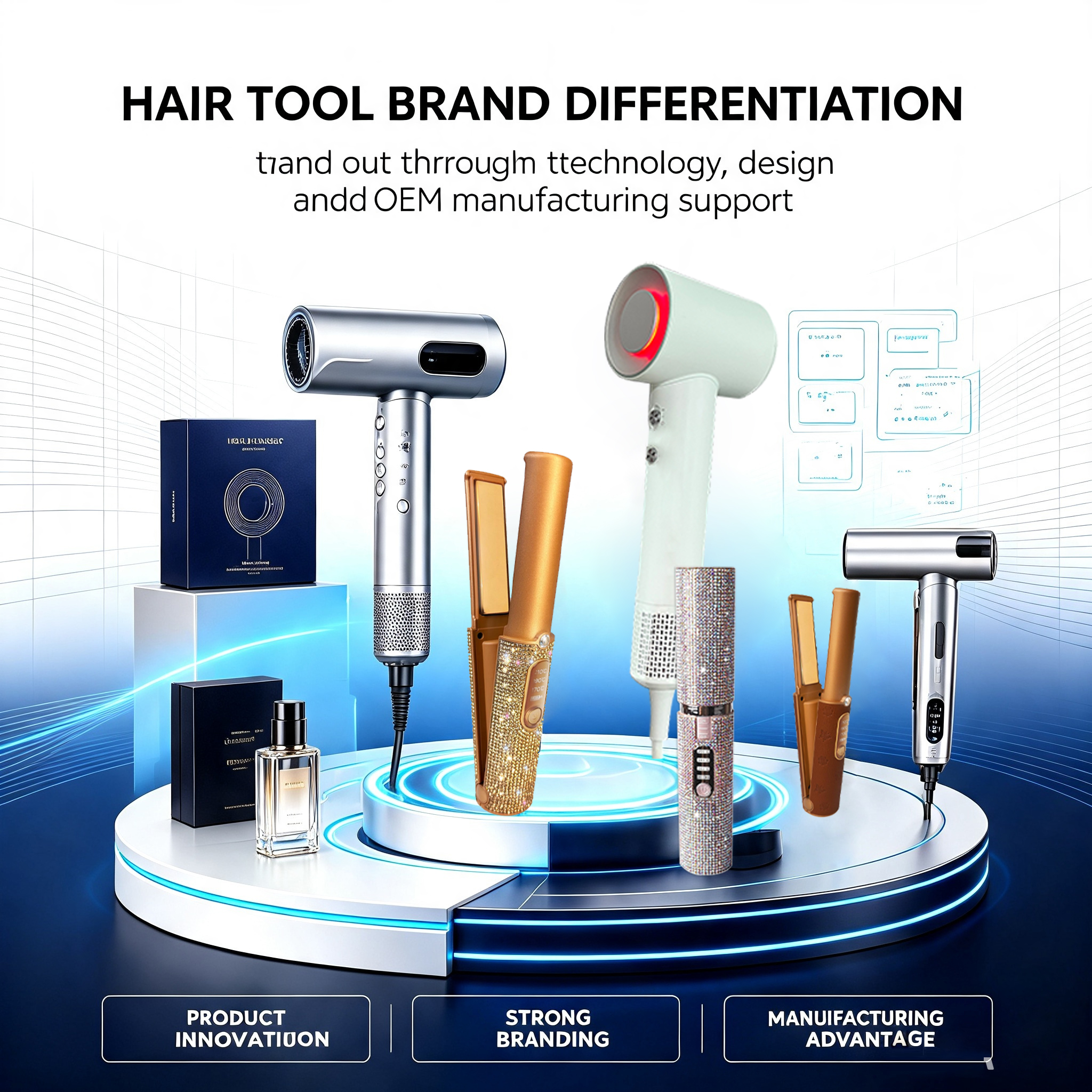
Noise Reduction and Product Differentiation
For beauty brands, technical improvements are valuable when consumers can feel the difference.
A product can differentiate itself through a combination of:
High-speed airflow
Brushless DC motor
Controlled operating noise
Intelligent temperature management
Ionic technology
Lightweight design
Ergonomic handling
This allows brands to move beyond basic "power" specifications.
Instead, they can communicate a complete user benefit:
Fast + Comfortable + Controlled + Premium
How Teejoin Approaches Hair Dryer Engineering
Teejoin develops and manufactures high-speed hair appliances for global beauty brands.
Our product development capabilities can integrate:
High-speed motor systems
Brushless DC motor technology
Digital motor control
Airflow optimization
Temperature sensing
Intelligent heat control
Ionic hair care technology
As an experienced OEM hair dryer manufacturer, Teejoin can support brands from product concept and engineering development through prototype testing, manufacturing, quality control, and global supply.
For brands developing premium durable hair styling tools, these technologies can be combined according to the target market and product positioning.
FAQ
What causes noise in a hair dryer?
Hair dryer noise mainly comes from the motor, airflow turbulence, fan movement, mechanical vibration, and the interaction between airflow and the product housing.
How can hair dryers reduce operating noise?
Manufacturers can reduce perceived noise through brushless motor technology, precise motor balancing, optimized airflow channels, vibration control, fan design, and improved housing structures.
Are high-speed hair dryers always louder?
No. Motor speed is only one factor affecting perceived noise. Proper motor balancing, airflow engineering, and vibration control can allow high-speed hair dryers to deliver strong performance with controlled operating noise.
Why is noise reduction important for salon hair dryers?
Salon professionals may use hair dryers repeatedly throughout the day. Controlled noise can improve comfort and contribute to a more pleasant working environment.
Can OEM hair dryers be customized for lower noise?
Yes. OEM development can incorporate motor selection, airflow design, vibration control, structural optimization, and performance testing according to the brand's target market and product requirements.
Conclusion
Better Hair Dryer Performance Starts With Better Engineering
Noise reduction is becoming an important part of modern hair appliance development.
A high-performance hair dryer should not be evaluated only by:
Motor RPM
Wattage
Airflow speed
The complete user experience also depends on:
Noise
Vibration
Temperature control
Weight
Ergonomics
Reliability
For beauty brands, combining these factors can create more differentiated and premium products.
Teejoin supports global brands with OEM and ODM hair appliance manufacturing, including high-speed hair dryers, professional styling tools, and smart beauty appliances.