


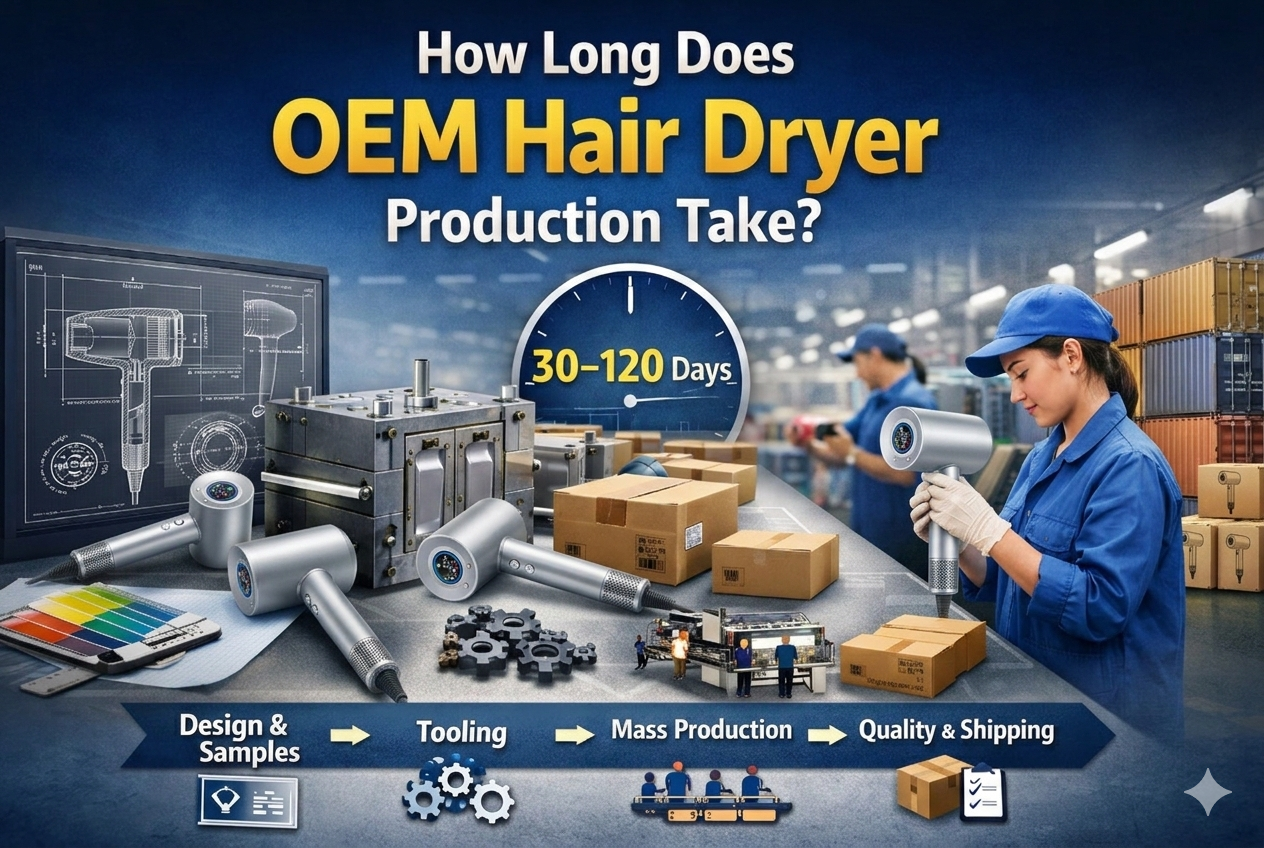
How Long Does OEM Hair Dryer Production Take?
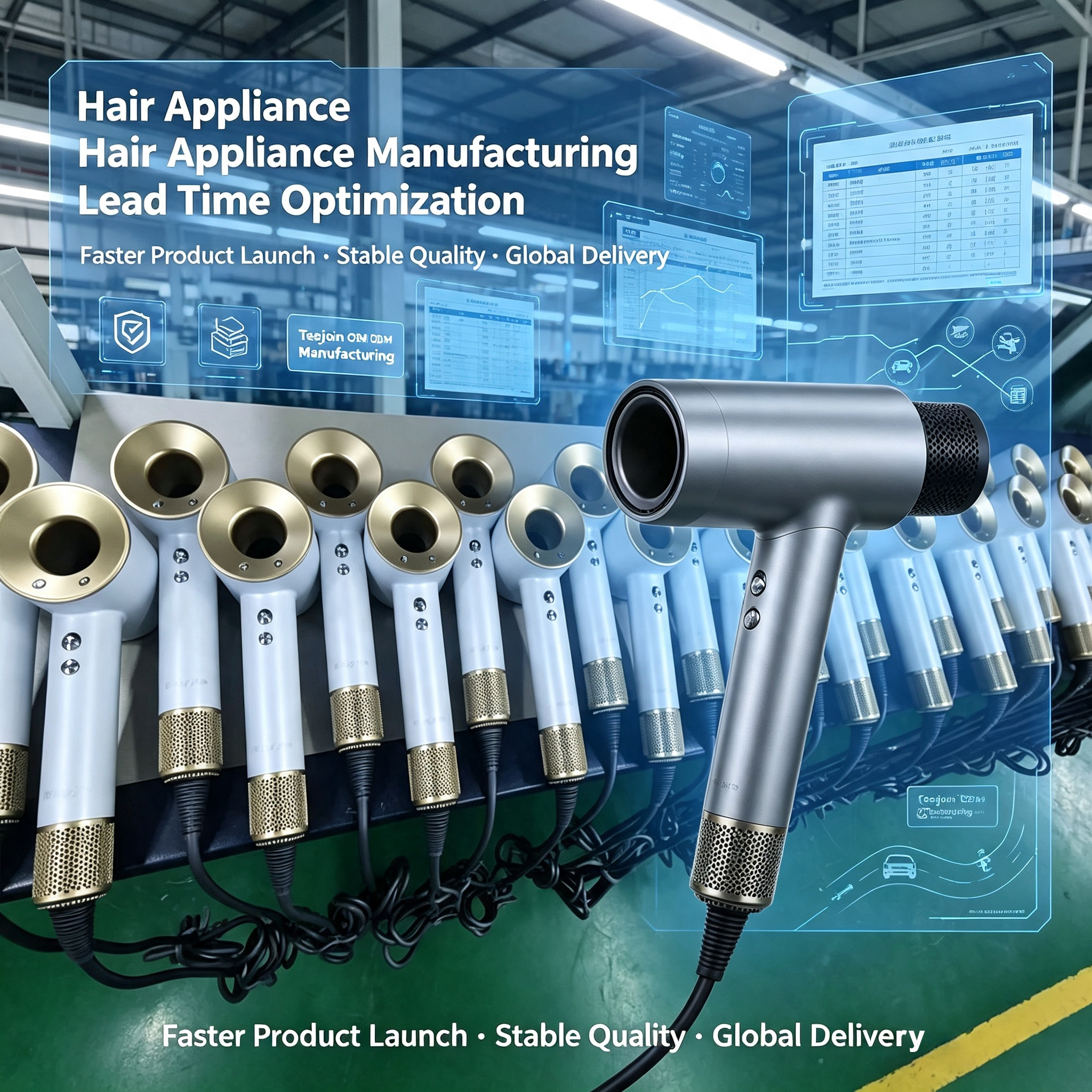
For brands, distributors, and Amazon sellers, understanding hair dryer lead time is critical for inventory planning, product launches, and seasonal sales. OEM manufacturing involves multiple stages — from product development to mass production — and each step affects the final delivery schedule.
So, how long does OEM hair dryer production actually take? The answer depends on customization level, order size, certifications, and factory scheduling. This guide explains the complete OEM production timeline so you can plan confidently.
Typical OEM Hair Dryer Production Timeline
Most standard OEM projects take:
⑴ 30–75 days for repeat orders
⑵60–120 days for new private label projects
Below is a detailed breakdown of the hair dryer manufacturing cycle.
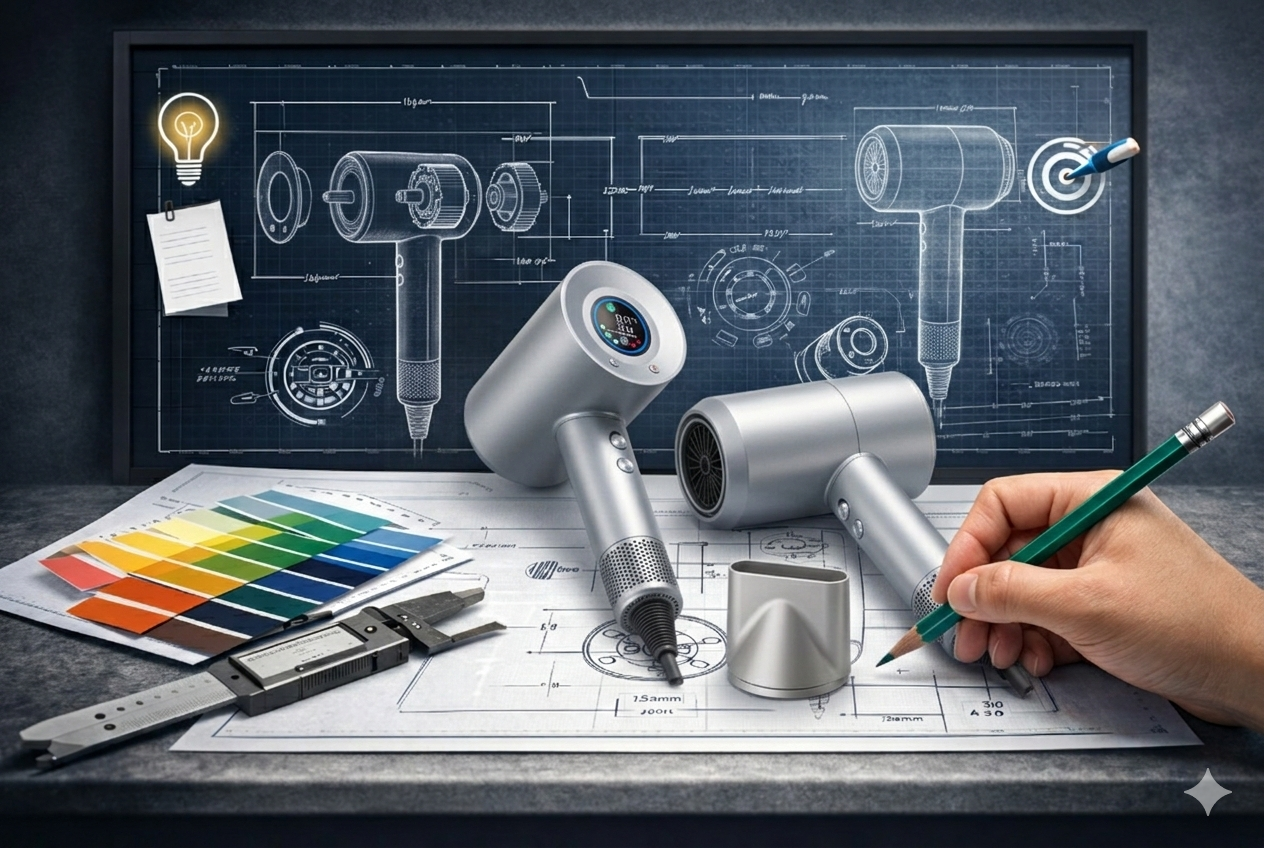
1. Product Design & Specification (7–15 Days)
If you are customizing an existing model, this phase is relatively fast. For fully new designs, it may take longer.
Key tasks include:
Power, motor type, and airflow specifications
Housing design and materials
Color and surface finish
Packaging requirements
Branding (logo placement, label design)
Clear specifications reduce delays later in the production timeline.
2. Sampling & Prototype Testing (10–25 Days)
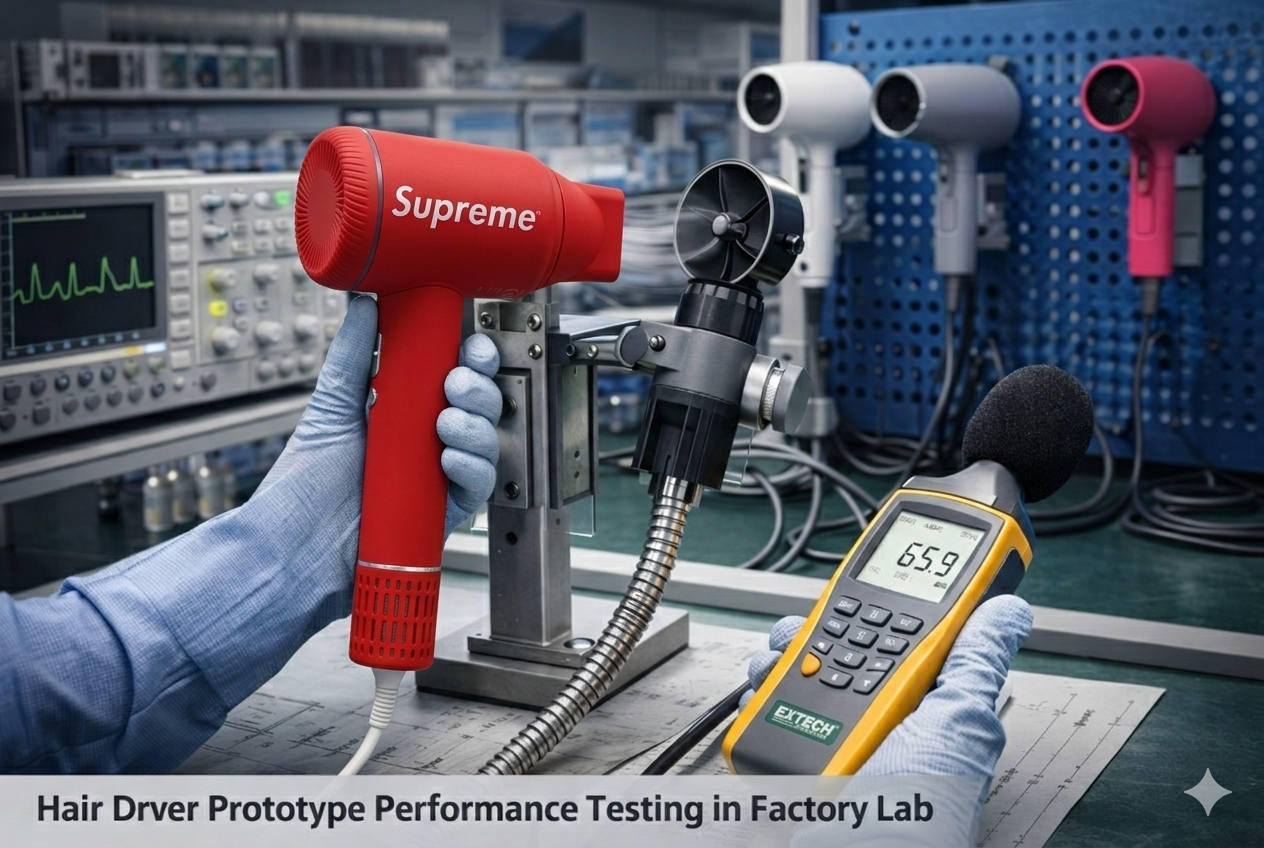
Factories produce pre-production samples for approval. This step verifies performance, appearance, and safety.
Testing may include:
Airflow and temperature measurement
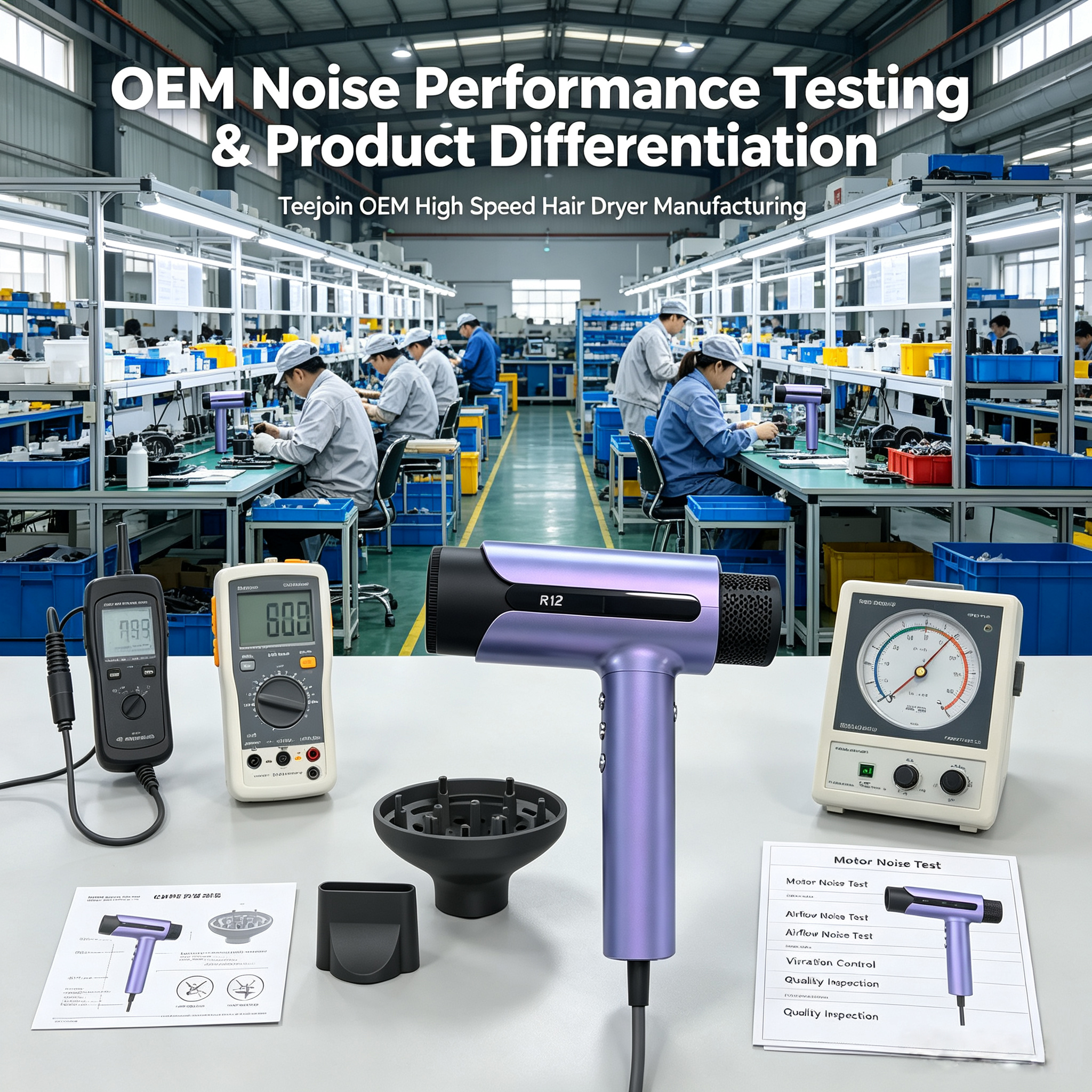
Noise level evaluation
Drop testing
Safety compliance checks
Packaging validation
Multiple revisions can extend the private label lead time, so fast feedback is important.
3. Tooling & Mold Preparation (15–35 Days)
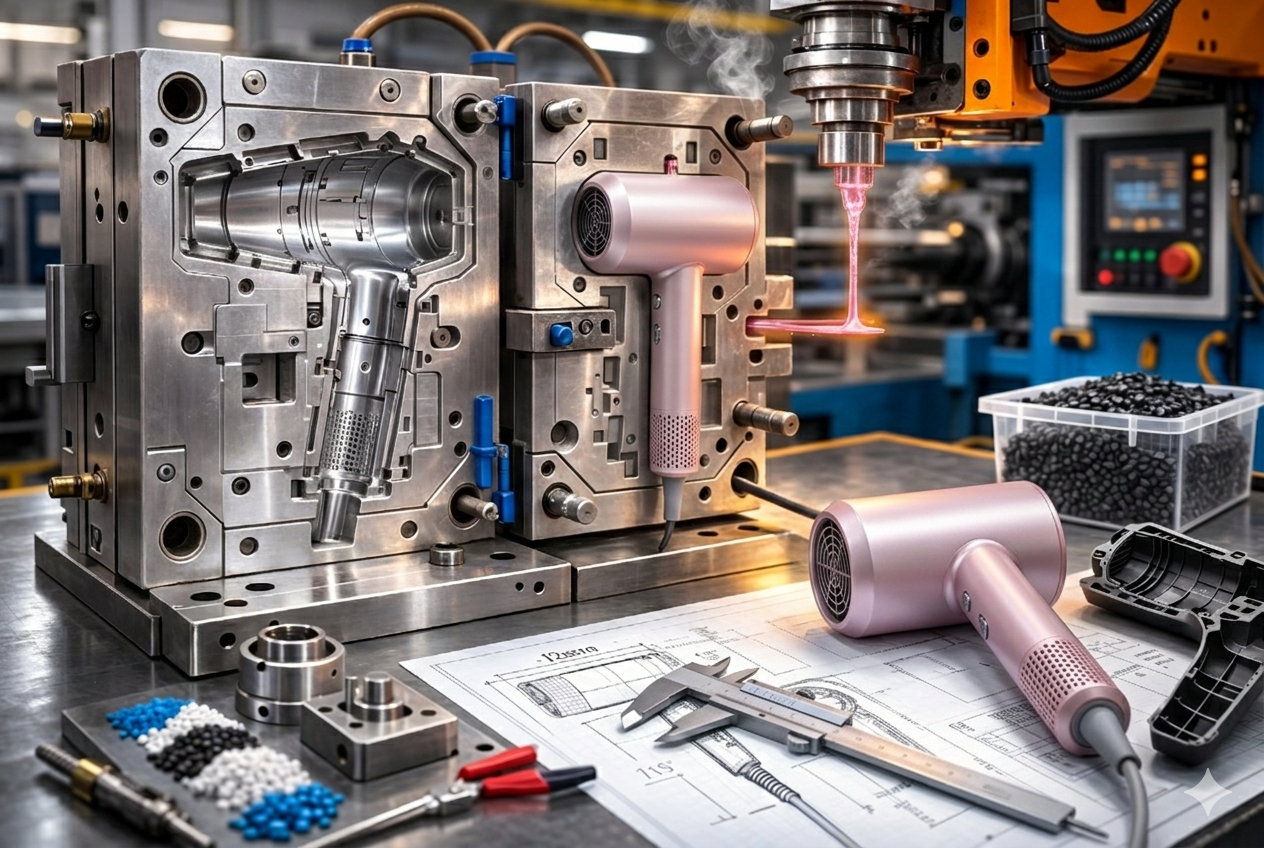
If new plastic parts or housings are required, molds must be manufactured.
Typical tooling lead time for hair dryers depends on complexity:
Minor modifications: 10–15 days
New molds: 20–35 days
Tooling is often the longest step for completely new designs.
4. Certification & Compliance (Parallel: 2–8 Weeks)
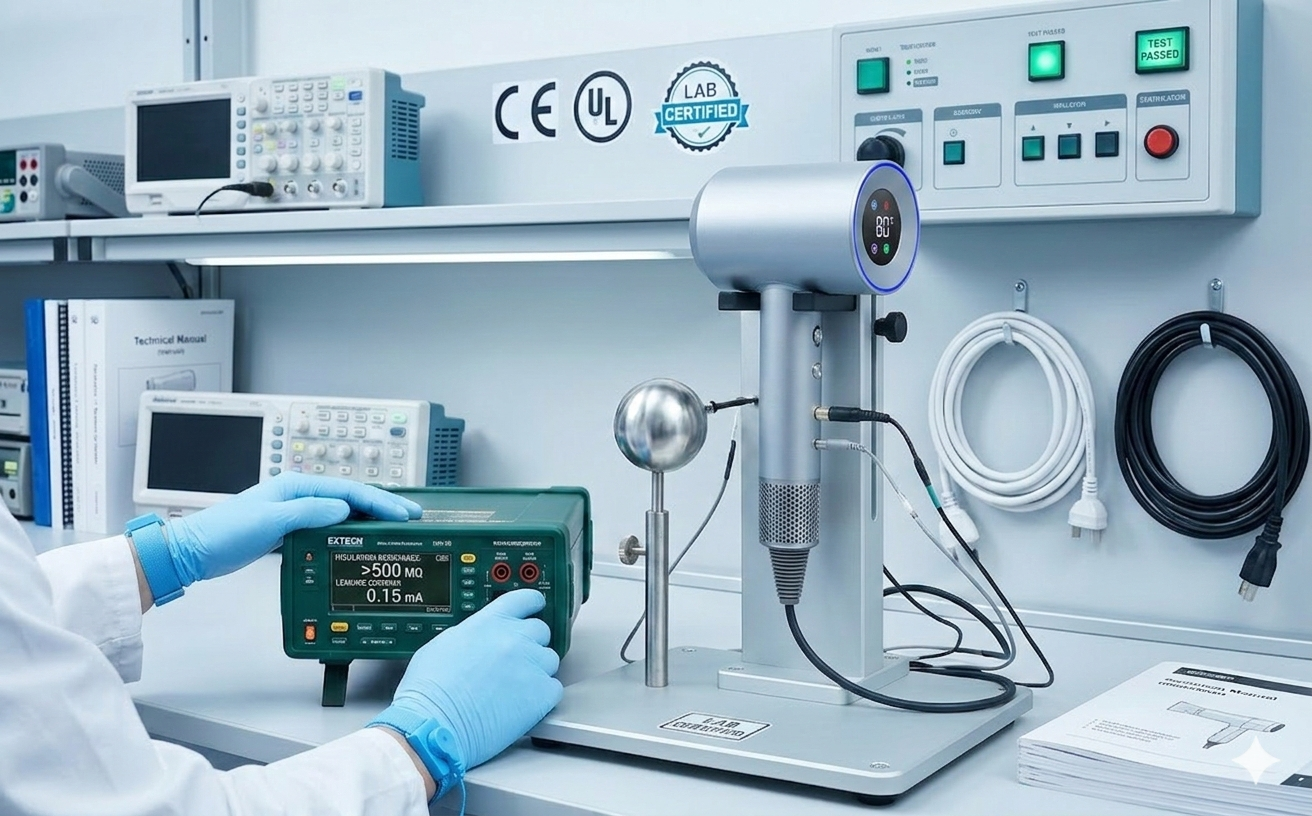
For many markets, electrical certifications are mandatory. This process may run alongside production preparation.
Common approvals include:
Safety certifications
Electromagnetic compatibility
Energy efficiency requirements
Regional compliance marks
Early planning prevents shipping delays.
5. Mass Production (20–40 Days)
Once materials arrive and approvals are complete, bulk manufacturing begins.
Factors affecting the bulk production timeline:
Order quantity
Motor availability
Component supply chain
Factory workload
Quality control procedures
Large orders may be split into batches to speed up delivery.
6. Quality Inspection & Packaging (3–7 Days)
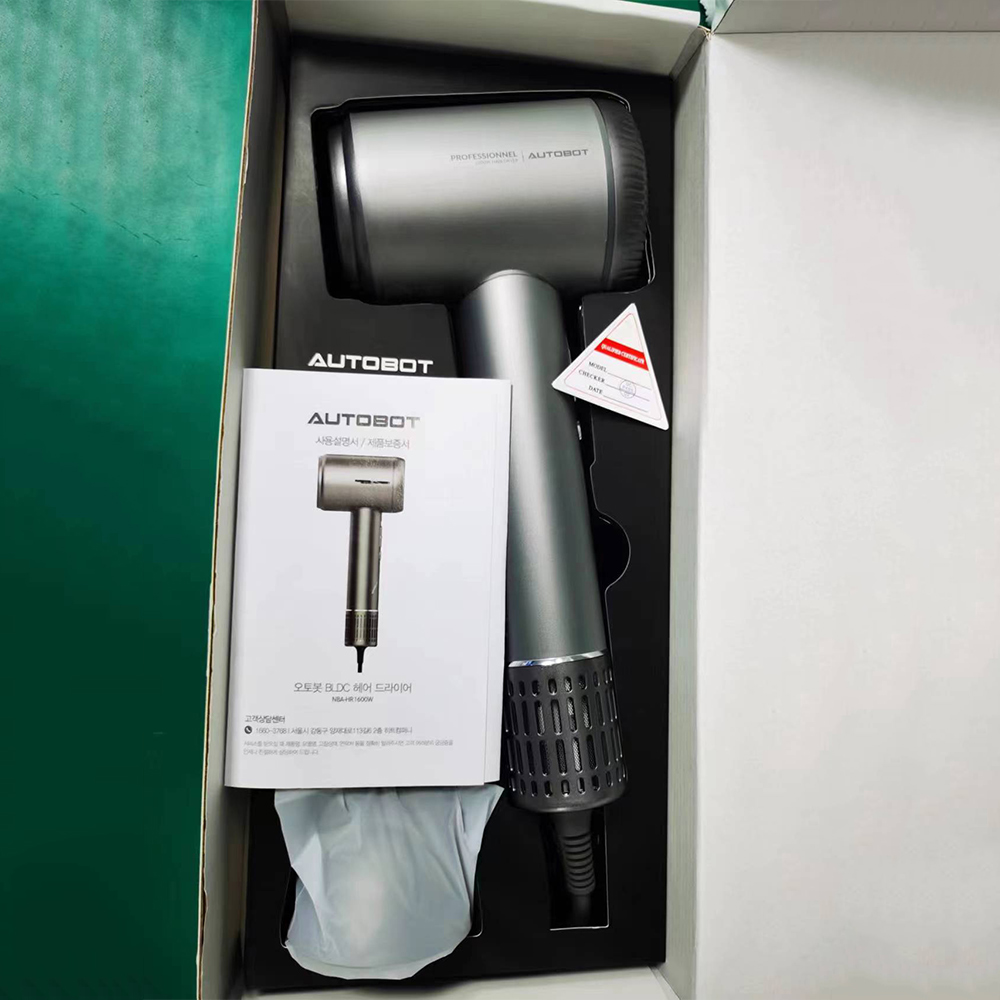
Before shipment, products undergo final checks:
Functional testing
Visual inspection
Packaging verification
Random sampling tests
Third-party inspections can add extra time but improve reliability.
7. Shipping & Delivery (Depends on Method)
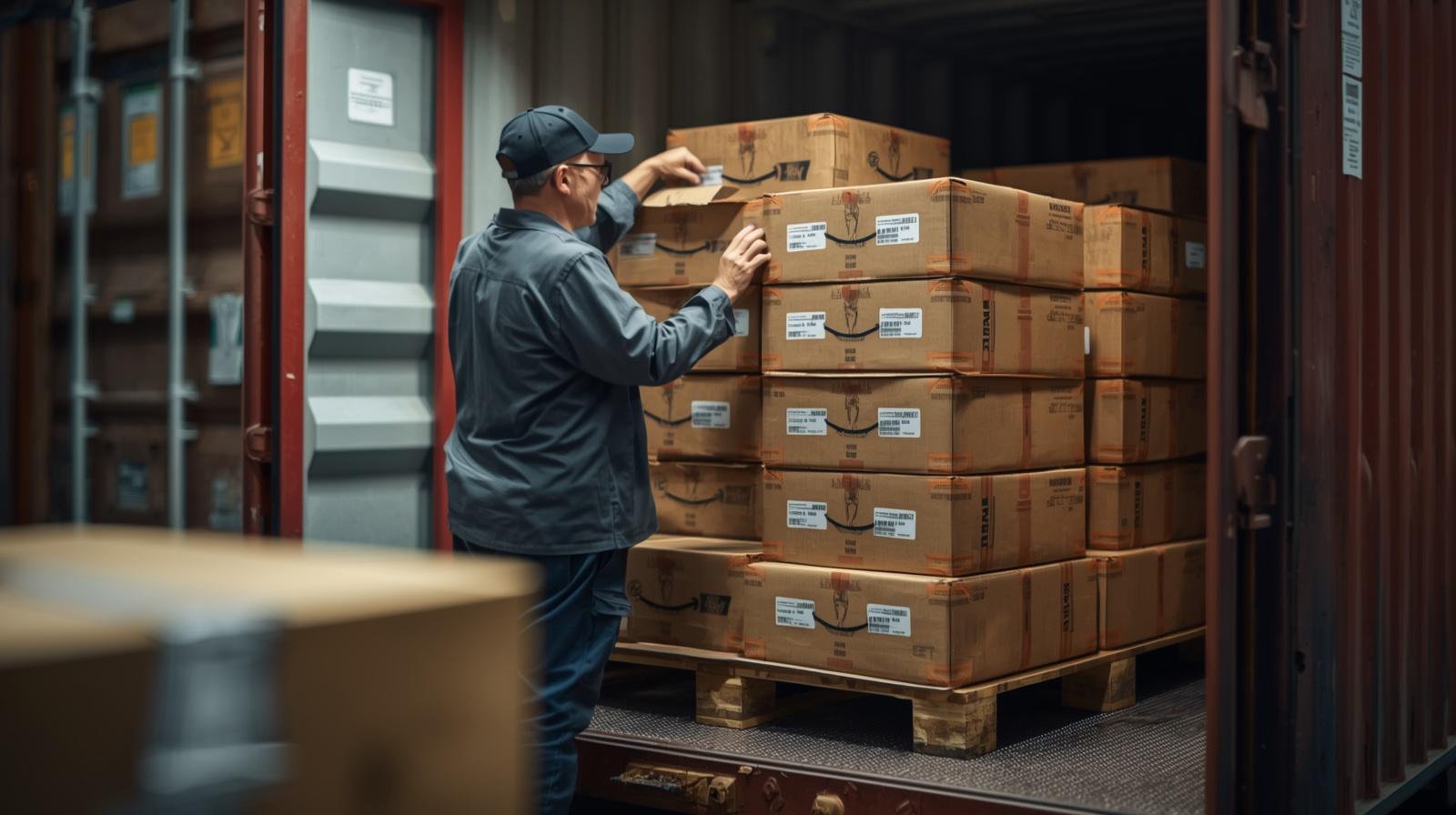
Transportation time varies significantly:
Air freight: 5–10 days
Express courier: 3–7 days
Sea freight: 25–45 days
Shipping is not part of manufacturing but must be included in your total planning.
Summary: End-to-End OEM Scheduling Guide
| Production Stage | Estimated Time |
|---|---|
| Design & Specs | 1–2 weeks |
| Sampling | 2–4 weeks |
| Tooling (if needed) | 3–5 weeks |
| Mass Production | 3–6 weeks |
| Inspection | 3–7 days |
☆ Total manufacturing lead time:
Repeat order: ~30–45 days
New OEM project: ~60–120 days
How to Reduce Hair Dryer Lead Time
Experienced buyers can shorten the timeline by:
① Choosing existing models instead of new designs
② Confirming specifications early
③ Responding quickly to sample feedback
③ Ordering standard colors and packaging
④ Working with factories that maintain component inventory
Final Thoughts
Understanding the full OEM production timeline helps avoid stock shortages, missed sales windows, and unexpected delays. While every project is unique, most OEM hair dryer manufacturing cycles fall within two to four months from concept to shipment.
Planning ahead — especially before peak sales seasons — ensures your products arrive on time and ready for market.