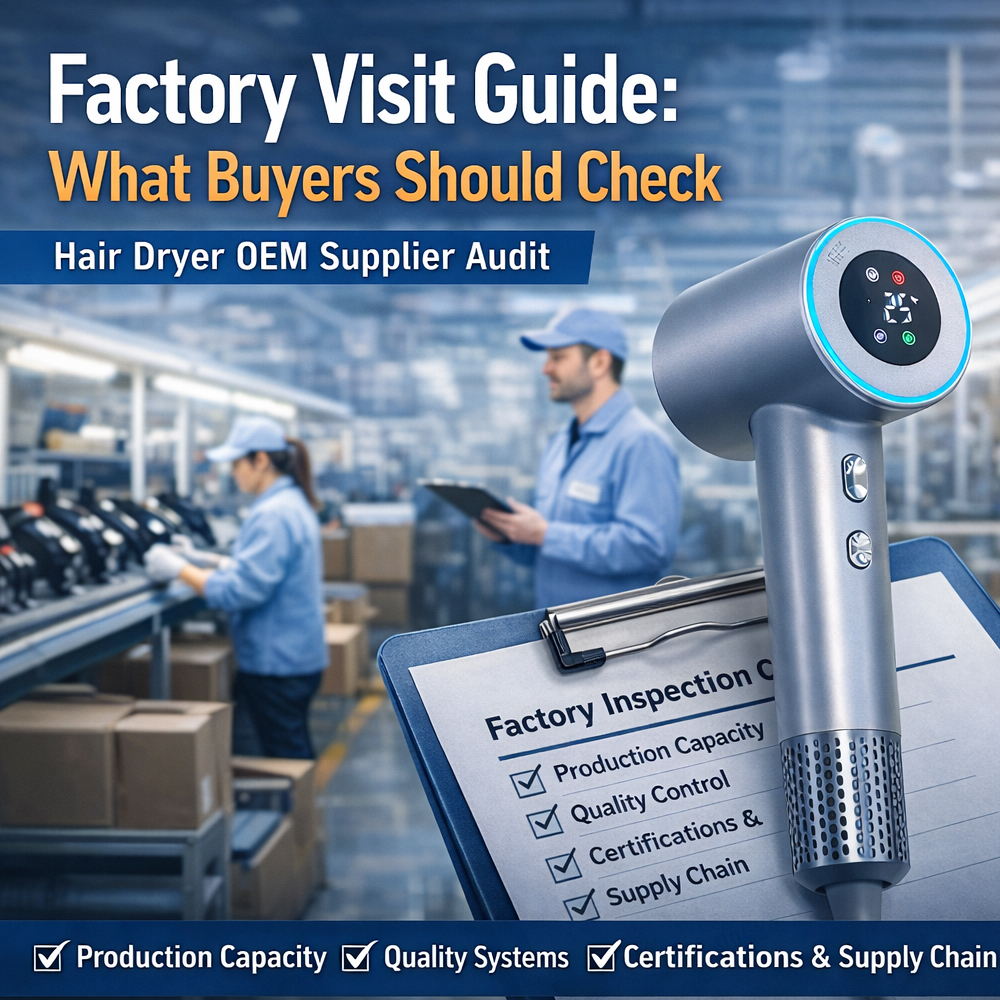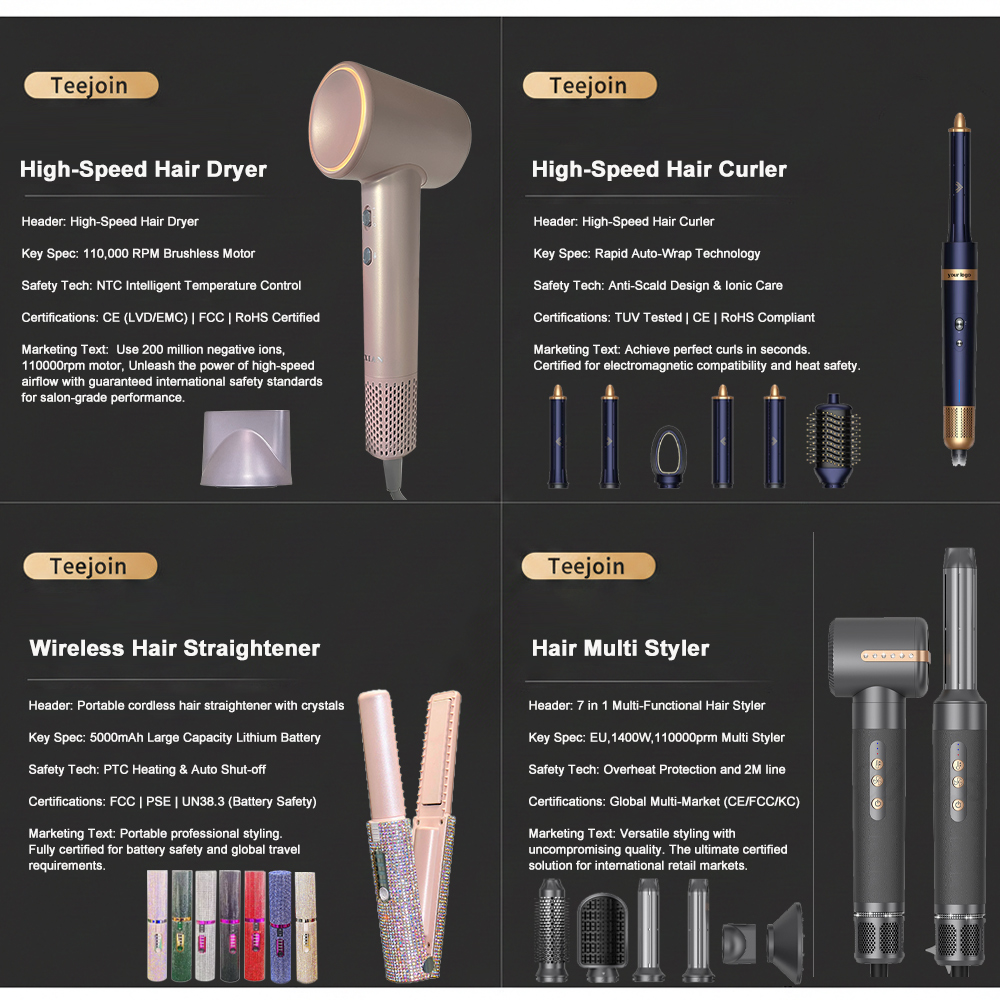



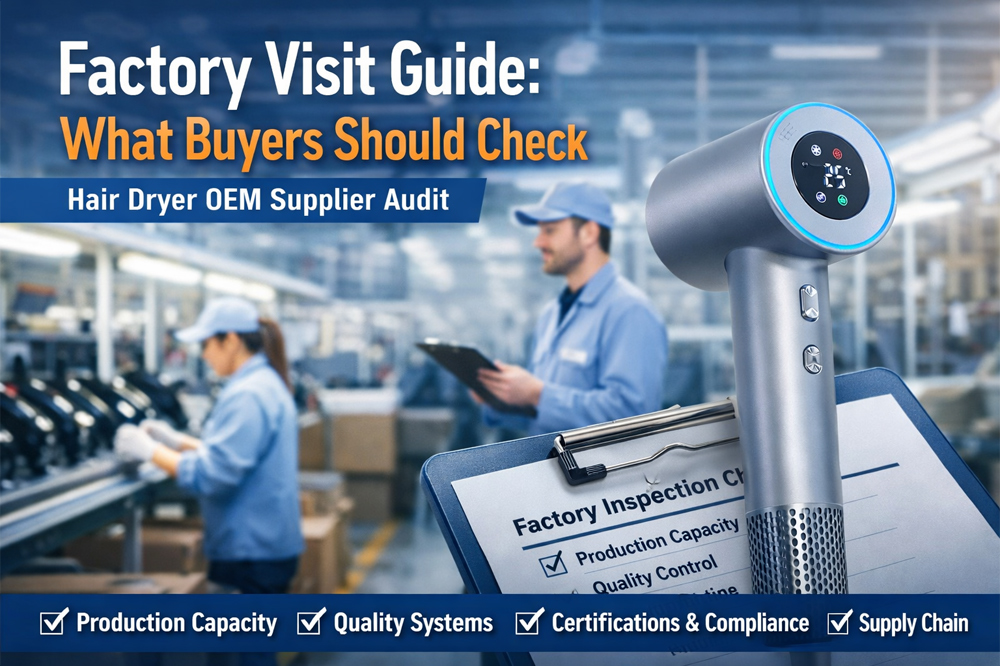
Teejoin Factory Visit Guide: What Buyers Should Check
For importers, brand owners, and distributors, a factory visit hair dryer supplier is one of the most reliable ways to evaluate a manufacturing partner. While online meetings and certifications provide useful information, nothing replaces an on-site inspection when verifying quality, capacity, and compliance.
A structured visit helps buyers reduce sourcing risks, confirm production capabilities, and ensure long-term cooperation with a trustworthy OEM supplier.
Why a Factory Visit Matters
A professional factory audit reveals details that documents alone cannot show:
Actual production conditions
Workforce stability and skills
Quality control practices
Compliance with safety standards
Real production capacity
Supply chain reliability
For B2B sourcing, especially in China, on-site verification is often the difference between a successful product launch and costly delays.
1. Production Capability and Equipment
Start by evaluating whether the factory can handle your required order volume and technical specifications.
Key points to review:
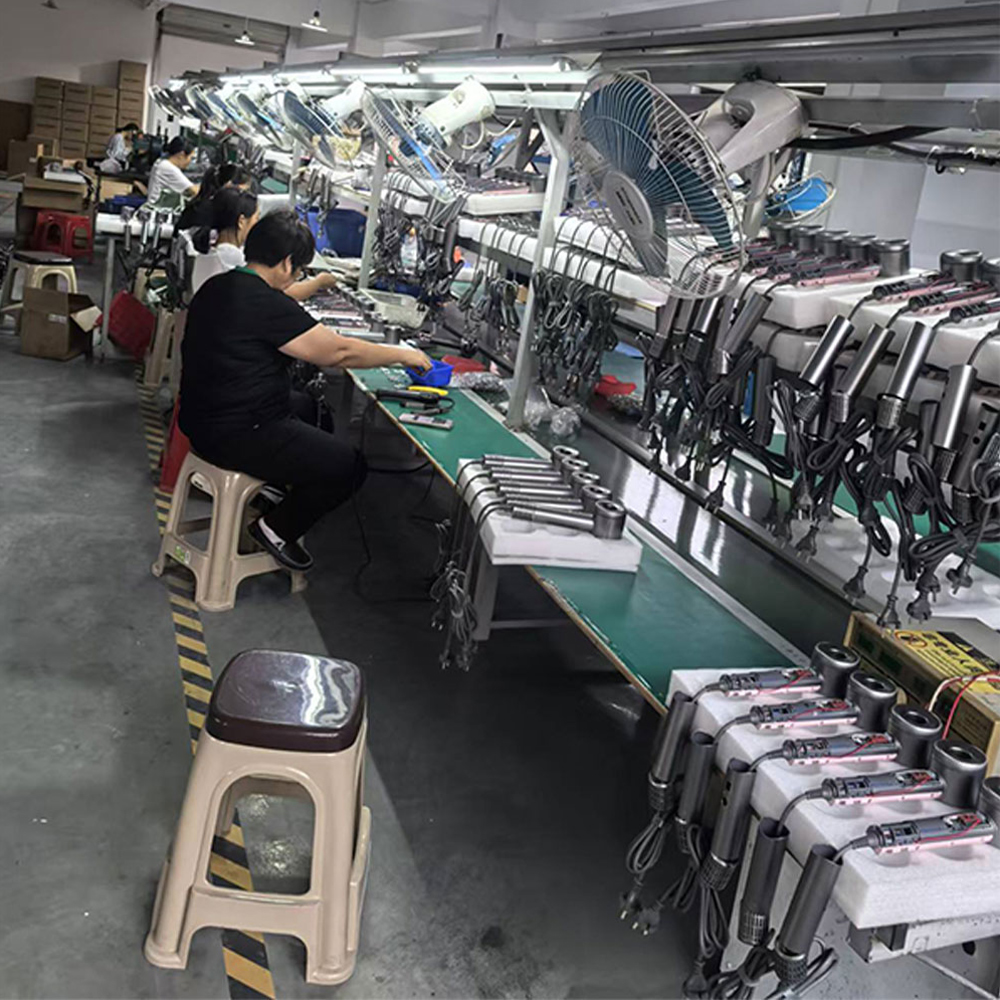
Assembly line automation level
Injection molding capability (for plastic housings)
Motor production or sourcing strategy
Tooling capacity for OEM customization
Maintenance of machinery
For hair dryer manufacturing audit purposes, buyers should confirm whether the factory produces key components in-house or relies heavily on subcontractors.
A well-equipped facility usually indicates stable output, consistent quality, and faster delivery times.
2. Quality Control System and Testing
Quality assurance is one of the most critical aspects of any factory audit checklist.
Ask to review:
Incoming material inspection procedures
In-process quality control checkpoints
Finished product testing standards
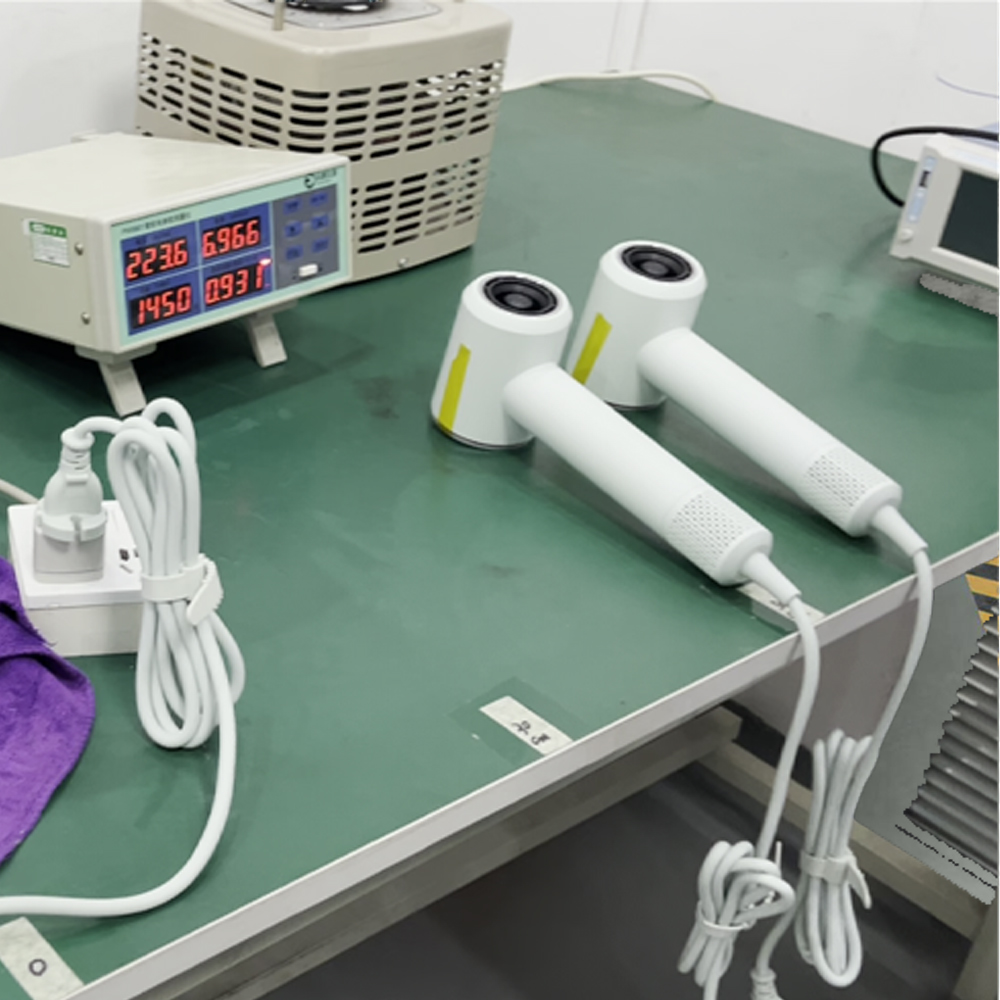
Reliability testing (drop, lifespan, heat resistance)
Safety testing for electrical appliances
A robust hair dryer QC process should include functional testing for airflow, temperature stability, noise level, and electrical safety.
Professional factories often maintain traceable records for each production batch, demonstrating a mature quality system inspection process.
3. Certifications and Compliance
International buyers must verify regulatory compliance for their target markets.
Important certifications to check include:
CE compliance for the European market
FCC for the United States
RoHS environmental compliance
ISO quality management systems
CB scheme or other safety approvals
During an ISO factory audit or CE factory compliance check, buyers should request original certificates and confirm their validity.
A responsible supplier will clearly understand export requirements and maintain updated documentation.
4. Production Capacity and Lead Time
Production capacity review ensures the factory can support both initial orders and future growth.
Key questions:
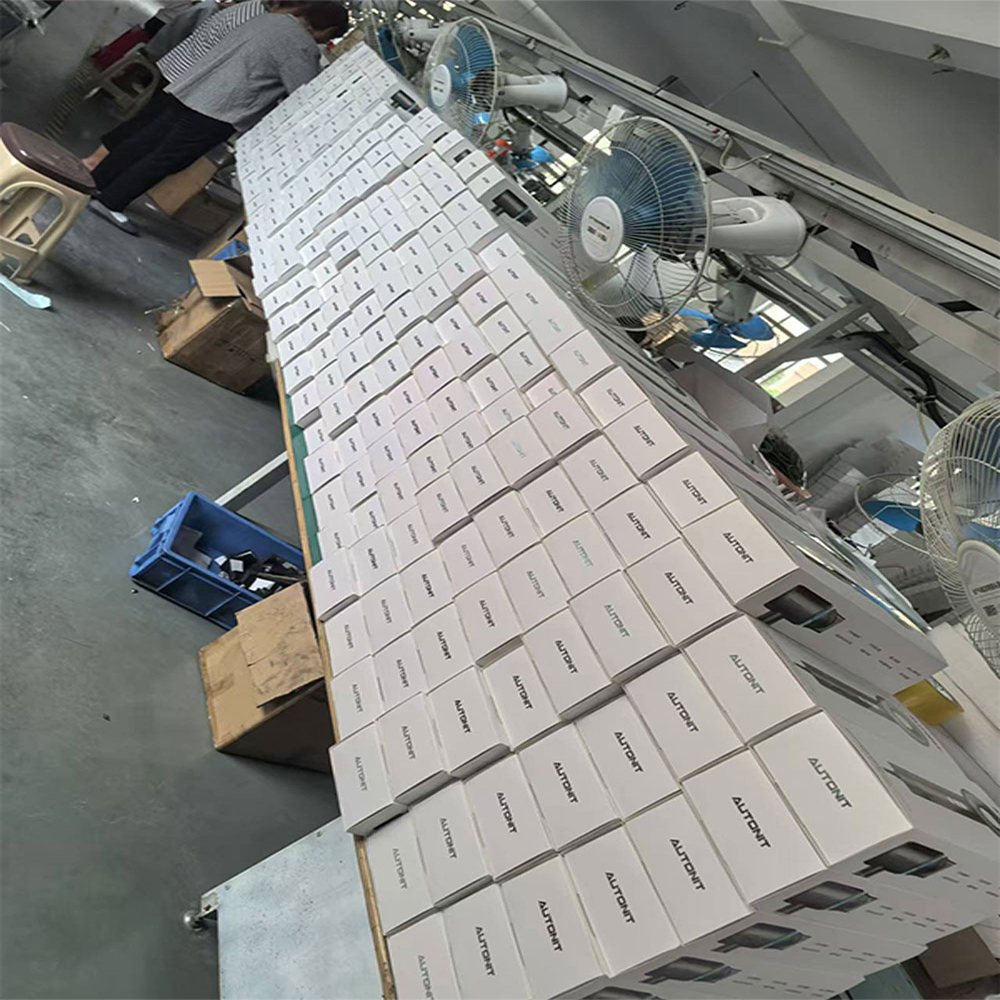
Monthly output for hair dryers
Peak season capacity
Ability to scale production
Lead times for tooling and bulk orders
Backup plans for component shortages
A reliable OEM supplier audit should confirm that delivery commitments are realistic, not just optimistic estimates.
5. Supply Chain and Component Quality
Hair dryers depend on critical components such as motors, heating elements, switches, and PCBA boards.
Buyers should verify:
Approved supplier lists
Long-term partnerships with component vendors
Incoming material traceability
Storage conditions for sensitive parts
Contingency sourcing plans
Strong supply chain management reduces risks of production interruptions and quality variations.
6. Management Transparency and Communication
A trustworthy factory partner demonstrates openness during the visit.
Positive indicators include:
Willingness to show production areas
Clear explanations of processes
Professional documentation
Experienced engineering support
Dedicated export or sales teams
Good communication is essential for successful B2B factory sourcing, especially for customized OEM projects.
7. Social Compliance and Workplace Conditions
Many international brands require ethical manufacturing standards.
Observe:
Worker safety measures
Cleanliness and organization
Labor conditions
Environmental practices
Emergency preparedness
Responsible factories understand that sustainability and social responsibility are increasingly important to global buyers.
Final Checklist for a Successful Factory Visit
Before concluding your visit, confirm that the supplier meets these core requirements:
① Verified production capability
② Reliable quality control system
③ Valid certifications and compliance
④ Stable supply chain
⑤ Transparent management
⑥ Professional communication
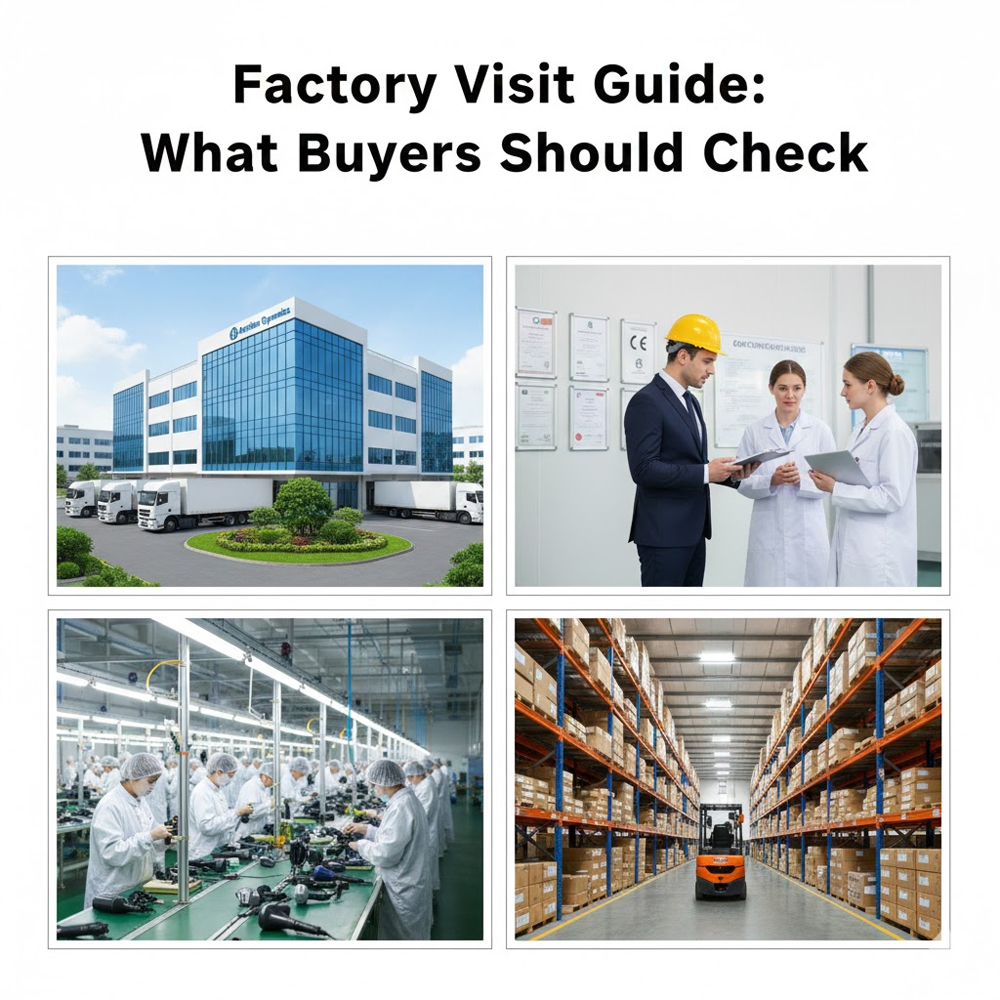
A well-conducted China factory visit guide process significantly reduces sourcing risks and builds confidence for long-term cooperation.
Conclusion
Choosing the right manufacturer requires more than price comparison. A comprehensive factory visit provides critical insights into a supplier’s true capabilities, reliability, and commitment to quality.
For buyers seeking a dependable OEM partner in hair dryer manufacturing, an on-site audit remains one of the most effective decision-making tools.
Investing time in a professional factory evaluation today can prevent costly problems tomorrow — and help establish a strong, sustainable supply partnership.
Related News
Read More >-
![Factory Visit Guide What Buyers Should Check]()
Factory Visit Guide What Buyers Should Check
Planning a factory visit hair dryer supplier? Learn what to check during a factory audit, including production capacity, quality systems, certifications, and OEM supplier reliability for safe B2B sourcing.
-
![Hair Dryer Certifications Explained CE FCC RoHS etc.]()
Hair Dryer Certifications Explained CE FCC RoHS etc.
Learn about the most important hair dryer certifications, including CE, FCC, and RoHS. Understand the global standards for safety, compliance, and quality assurance for your hair dryers.
-
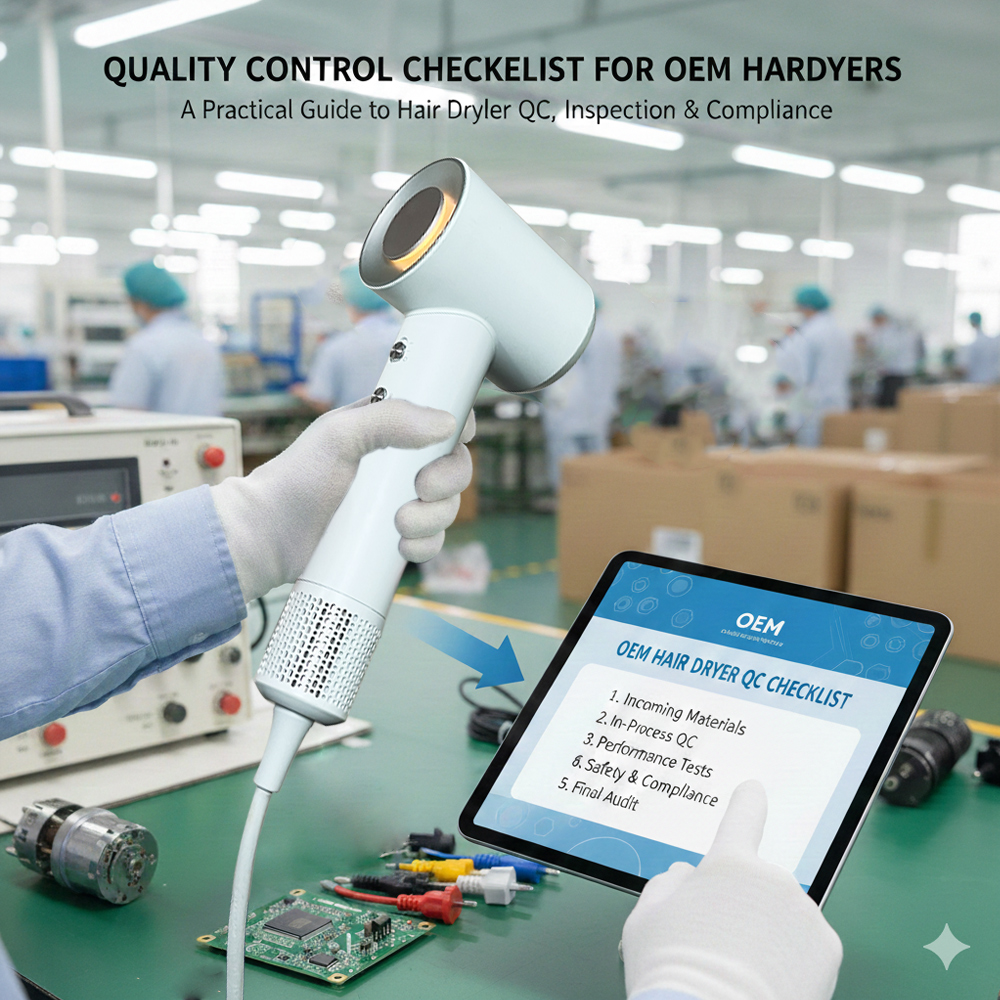
![Quality Control Checklist for OEM Hair Dryers]()
Quality Control Checklist for OEM Hair Dryers
When sourcing OEM hair dryers, quality control is not optional — it is the foundation of brand reputation, customer safety, and long-term business success. For distributors, private label brands, and retailers in Europe and North America, a clear hair dry
-
![How We Test High Speed Hair Dryer Motors]()
How We Test High Speed Hair Dryer Motors
Discover how Teejoin ensures top performance and durability of our hair dryer motors through rigorous testing processes. From high-speed RPM tests to heat resistance and lifespan evaluations, we ensure every motor is built for quality, reliability, and lo
-
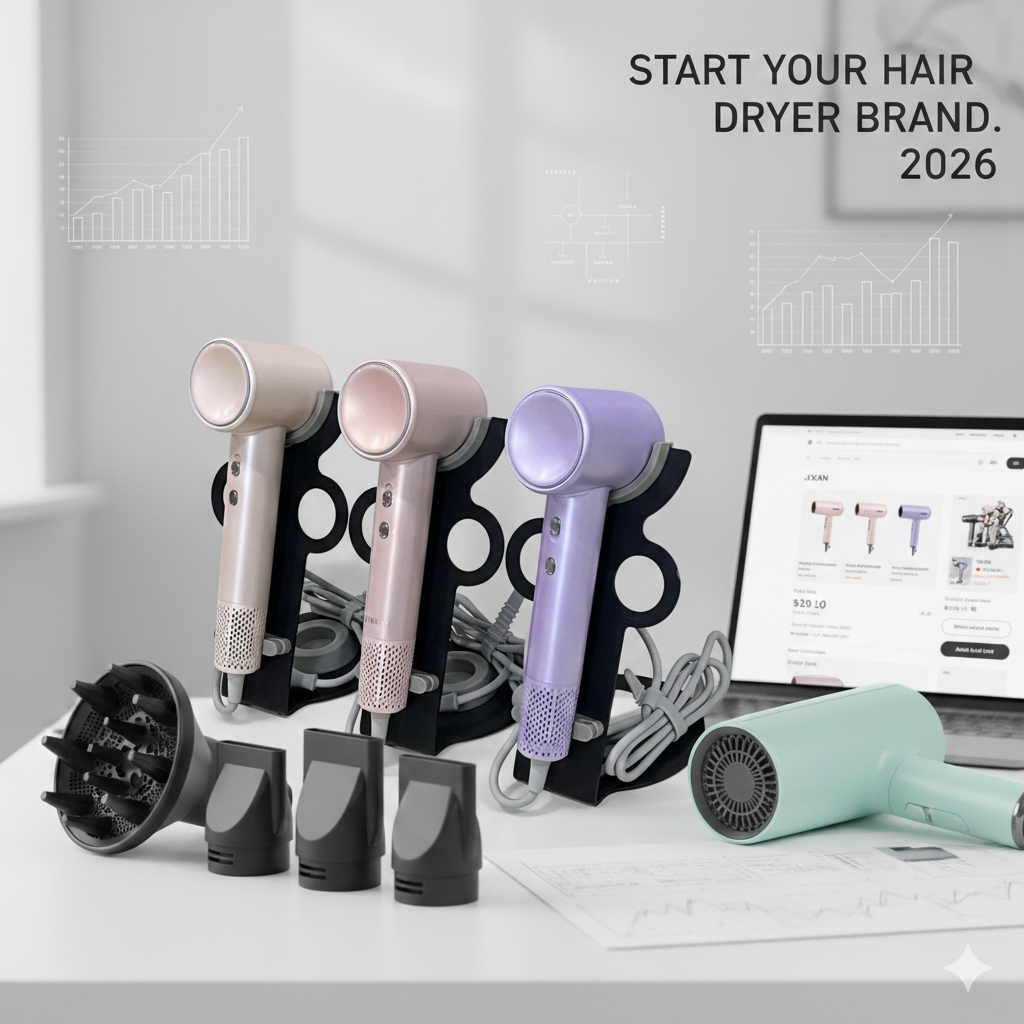
![How to Start a Hair Dryer Brand in 2026]()
How to Start a Hair Dryer Brand in 2026
Start your own hair dryer brand with a reliable OEM supplier. Private label solutions, CE & FCC certification, custom design, and full manufacturing support in China.
-
![OEM Hair Dryer Explained OEM vs ODM]()
OEM Hair Dryer Explained OEM vs ODM
As the global beauty appliance market continues to grow, more brands are turning to OEM hair dryer manufacturing to launch competitive products quickly and cost-effectively.
-
![Foldable High-Speed Hair Dryer Launches]()
Foldable High-Speed Hair Dryer Launches
Discover the new Foldable High-Speed Brushless Motor Hair Dryer — a 1500W smart ionic hair care solution blending power, portability, and professional results. Perfect for everyday home use, travel, or salon styling.
-
![How Smart Temperature Control Protects Hair]()
How Smart Temperature Control Protects Hair
Excessive heat is one of the main causes of hair damage, leading to dryness, breakage, and loss of shine. As hair care technology evolves, smart temperature hair dryers have become a key innovation in protecting hair while maintaining fast drying performa