


Quality Control Checklist for OEM Hair Dryers | Hair Dryer QC Guide
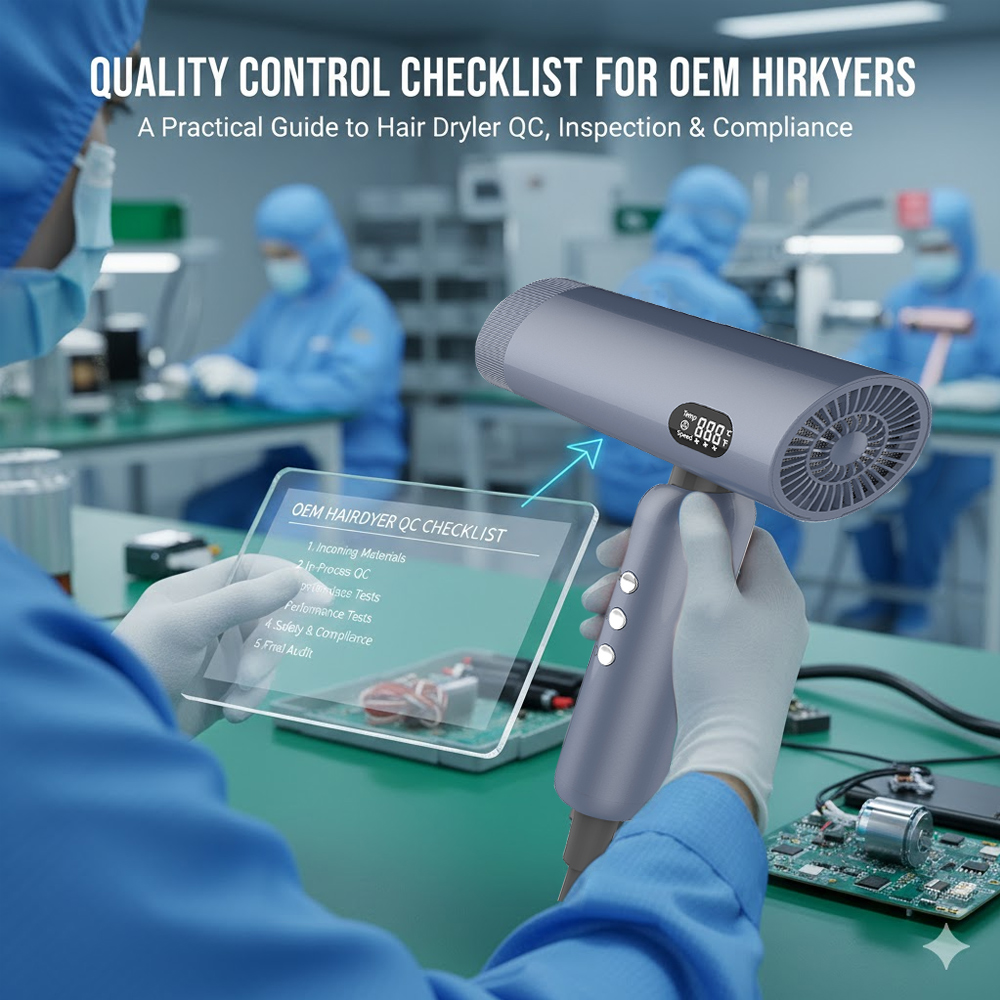
A Practical Guide to Hair Dryer QC, Inspection & Compliance
When sourcing OEM hair dryers, quality control is not optional — it is the foundation of brand reputation, customer safety, and long-term business success. For distributors, private label brands, and retailers in Europe and North America, a clear hair dryer QC checklist helps ensure every unit meets performance, safety, and regulatory expectations.
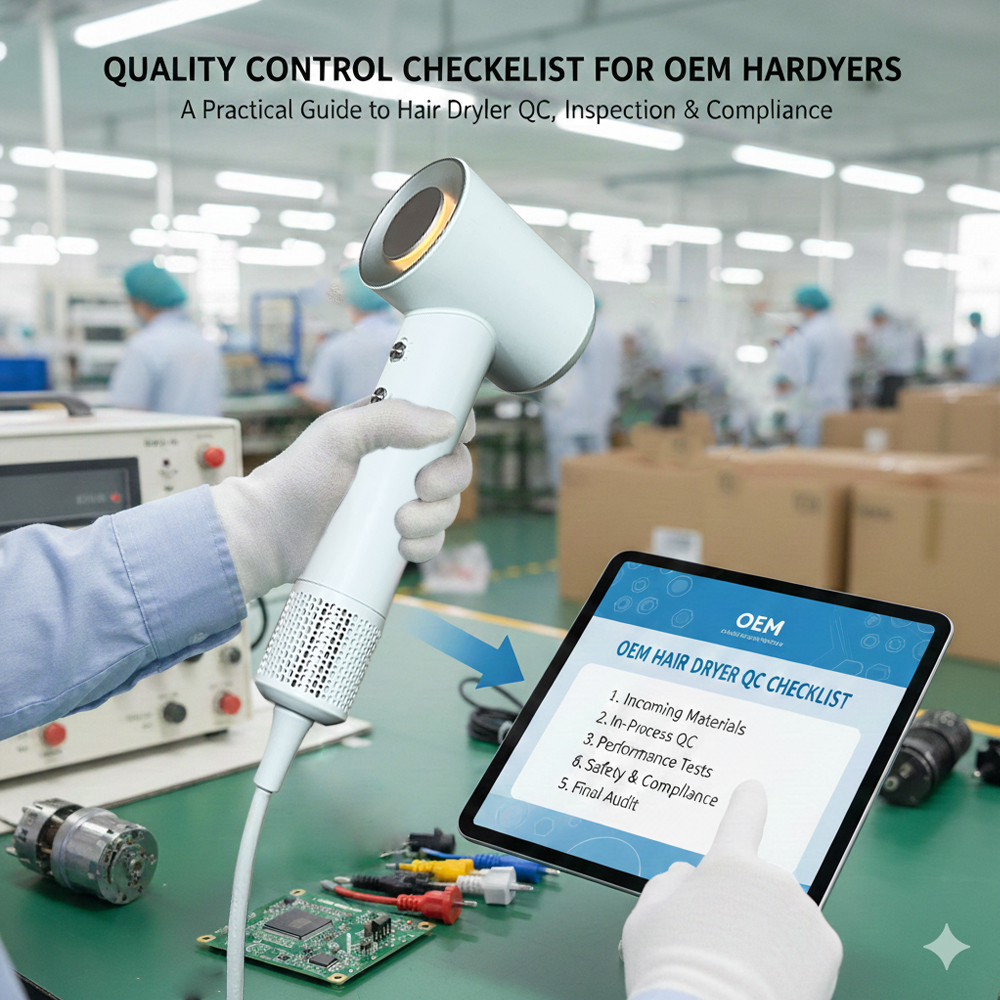
This guide walks you through a professional OEM hair dryer quality control process, covering inspection points, testing standards, factory audits, and compliance requirements used by reliable manufacturers.
Why Hair Dryer Quality Control Matters for OEM Buyers
In the beauty appliance industry, even small defects can lead to returns, negative reviews, or regulatory risks. A structured OEM supplier quality control system helps prevent:
Overheating or electrical safety issues
Motor failure and short product lifespan
Excessive noise or vibration
Inconsistent airflow and temperature
Non-compliance with CE, FCC, or other standards
A strong hair dryer manufacturing quality system protects both the brand owner and end users.
OEM Hair Dryer Quality Control Checklist (Step by Step)
1. Incoming Material Inspection
(IQC – Incoming Quality Control)
Before production begins, all key components must be inspected.
Inspection checklist includes:
Motor RPM and balance check
Heating wire material and resistance test
Power cord thickness and plug specification
Plastic housing (ABS/PC) heat resistance
PCB and electronic components verification
This step is critical for early hair dryer defect control.
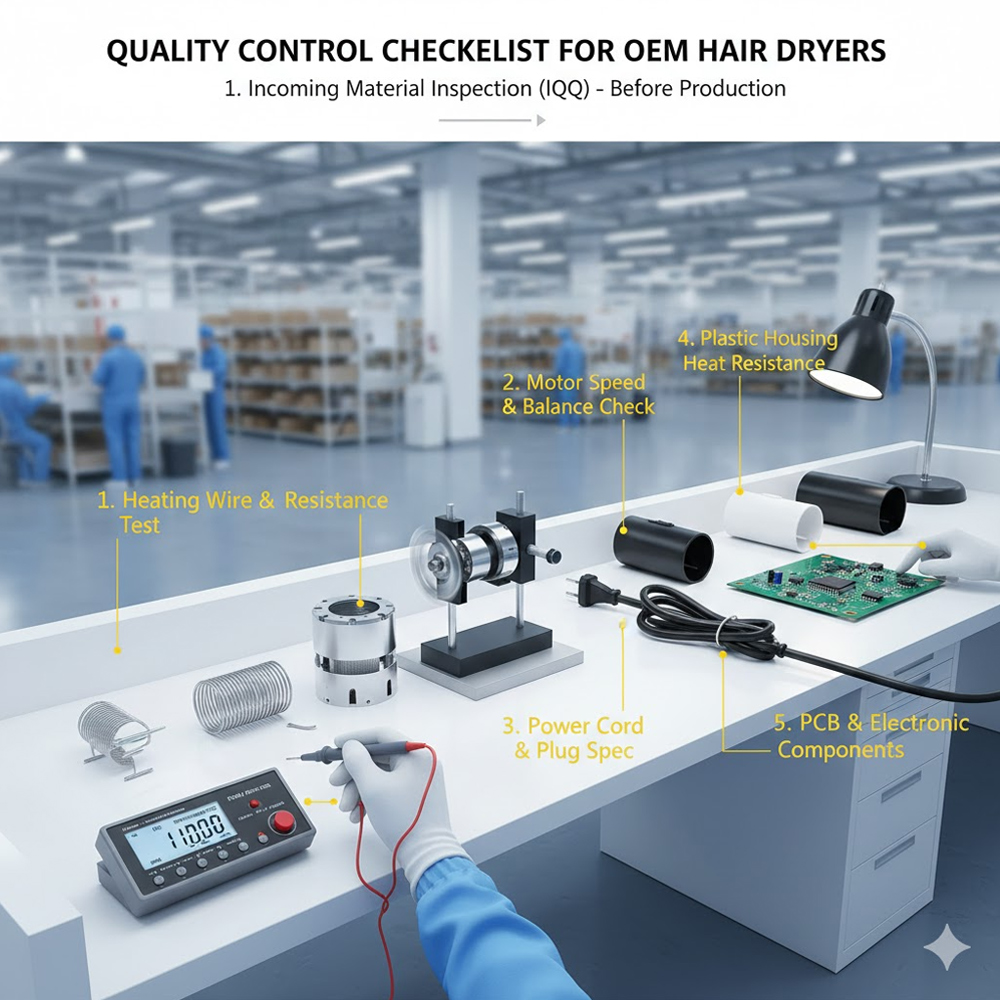
Illustration showing motor, heating wire, PCB, and housing being checked at the factory entrance.
2. In-Process Quality Control
(IPQC – During Production)
During assembly, QC teams monitor consistency and workmanship.
Key inspection points:
Wiring layout and insulation protection
Screw torque and assembly alignment
Heating element installation accuracy
Fan blade clearance and balance
Internal airflow channel sealing
Effective IPQC reduces rework and ensures stable production quality checklist execution.
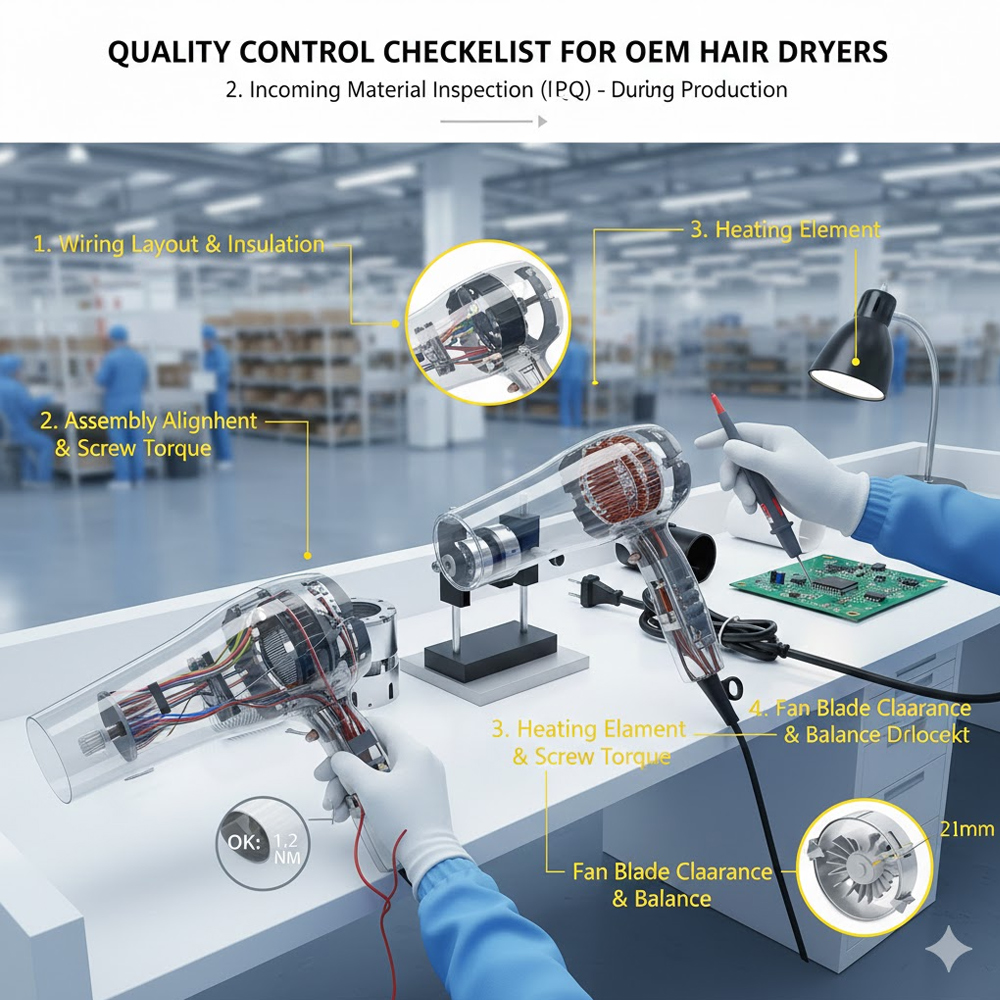
Step-by-step visual of inspection during motor assembly, wiring, and housing closure.
3. Performance & Reliability Testing
Every OEM hair dryer should undergo standardized functional testing.
Hair dryer testing standards typically include:
Airflow speed (m/s) and volume
Temperature stability (hot/warm/cool modes)
Power consumption and voltage tolerance
Continuous operation test (4–8 hours)
Drop and vibration resistance testing
This stage focuses on hair dryer reliability testing, especially important for high-speed and brushless motor models.
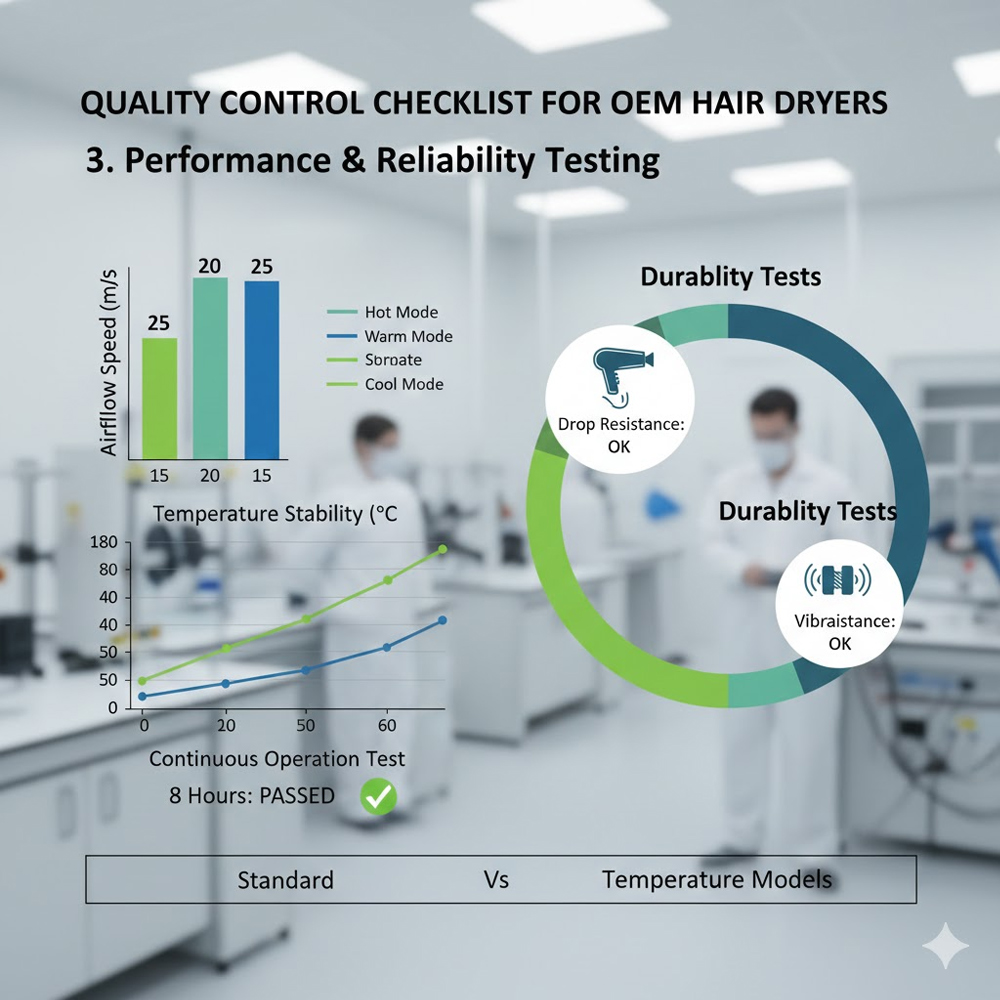
Comparison chart showing airflow, temperature control, and durability test results.
4. Safety Inspection & Compliance Testing
For EU and US markets, hair dryer safety inspection is non-negotiable.
Mandatory checks include:
Insulation resistance test
Leakage current test
Grounding continuity test
Overheat protection verification
Fire resistance of materials
Most OEM buyers also require third-party lab testing for:
CE (LVD + EMC)
FCC
RoHS / REACH
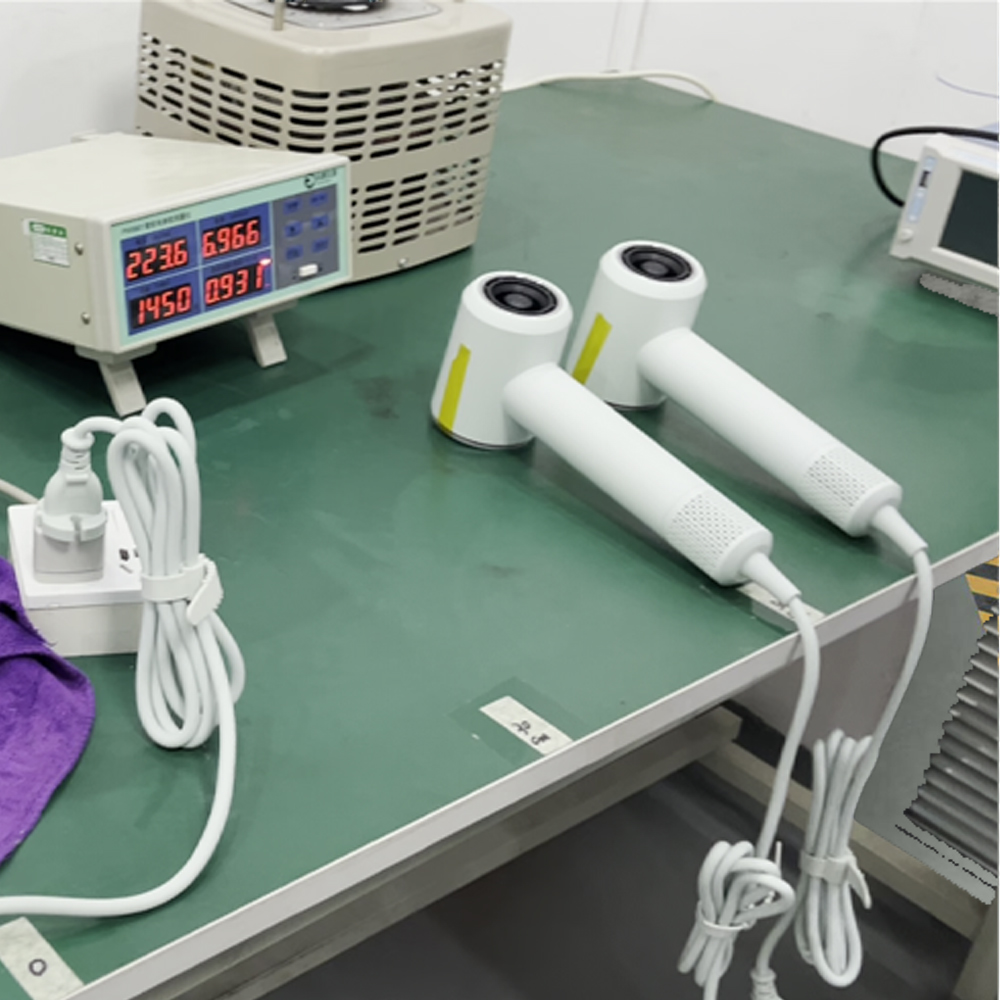
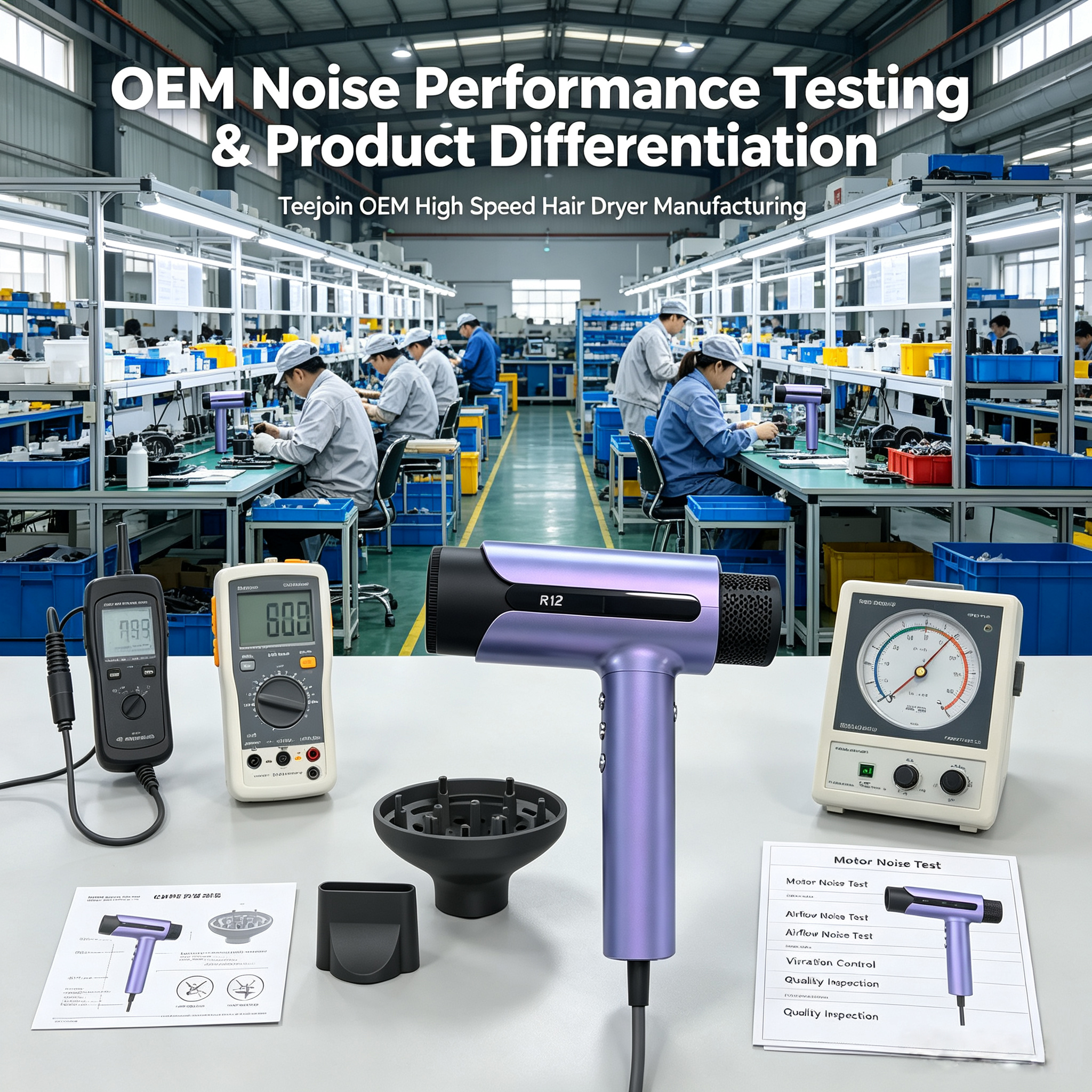
Lab setup showing electrical safety and thermal protection tests.
5. Final Inspection Before Shipment
(FQC – Final Quality Control)
Before packing, finished products are inspected based on AQL standards.
Final checklist includes:
Appearance (scratches, color consistency)
Logo and labeling accuracy
Function test of each unit
Packaging integrity (drop test)
User manual and compliance marking verification
This step ensures the OEM hair dryer meets customer expectations at delivery.
QC staff checking appearance, packaging, and labeling before shipment.
Factory Audit: Evaluating OEM Supplier Quality Control
A reliable hair dryer factory audit goes beyond product checks.
Audit focus areas:
QC process documentation (IQC / IPQC / FQC)
Testing equipment calibration records
Production traceability system
Worker training and SOP compliance
Corrective & preventive action (CAPA) system
Professional OEM factories welcome audits — it shows transparency and confidence.
Common Defects Prevented by a Strong QC System
An effective beauty appliance QC system significantly reduces:
Motor imbalance and noise issues
Heating inconsistency
Power cord breakage
Loose internal wiring
Cosmetic defects and poor finishing
For OEM brands, fewer defects mean fewer returns and stronger market trust.
How Teejoin Implements OEM Hair Dryer Quality Control
At Teejoin, quality control is integrated into every production stage.
Dedicated QC team for hair dryer inspection process
In-house testing labs for performance and safety
Compliance-ready production for CE, FCC, and global markets
OEM hair dryer QC checklist customized per client requirement
Our goal is simple: stable quality, reliable performance, and long-term OEM partnerships.
Conclusion
A clear Quality Control Checklist for OEM Hair Dryers is essential for any brand sourcing from factories. From material inspection to compliance testing, each step protects product quality and brand reputation.
If you are looking for an OEM partner with a proven hair dryer quality control system, choosing a factory with transparent inspection standards and documented testing processes makes all the difference.